Est. 1880s · Saluda, North Carolina
Our Story
A historic landmark reimagined — the story of a building, a town, and two men who believed in both.
At 229 Greenville Street in Saluda, North Carolina, stands a building that has witnessed more than a century of mountain life. Listed on the National Historic Registry and nestled in one of the South's most beloved small towns, The Saluda Inn is the story of a place — and the people who refused to let it be forgotten.

1835–1878
The Railroad That Put Saluda on the Map
In the 1830s, the people of Charleston, SC dreamed of a rail connection from the Ohio River to their harbor. With the encouragement of legislators like Joel Poinsett, the Louisville, Cincinnati, and Charleston Railroad Company was chartered in South Carolina in 1835. Short sections of track were laid by small companies — milestones included reaching Columbia in the 1840s and Spartanburg in the early 1870s. By 1874, the Spartanburg and Asheville Railroad was pushing across the Blue Ridge Mountains toward Asheville. Col. Thaddeus Coleman and Capt. Charles W. Pearson, former Confederate Army officers, undertook to build the railroad from Spartanburg to Asheville. Rejecting the old trading path and wagon road due to unstable ground, Pearson and Coleman routed the roadbed up the steep gorge along the Pacolet River — straight up the Blue Ridge Escarpment with no foothills to meander through. They built the steepest mainline standard-gauge railroad in the United States: a three-mile slope averaging 4.7% with a maximum over 5.1%. After three months of convict labor, the tracks finally reached the top of the grade. The huge iron monster came puffing noisily into view on Independence Day, 1878. Pace's Gap was changed forever — people cheered, children hid behind their mothers' skirts, and horses reared in terror. The train engineers referred to the trek as "going up Saluda Mountain," and though no peak by that name existed, Pace's Gap chartered with North Carolina as "Saluda" in February 1881. The railroad put "Saluda" on the map — but not the town.
A Town Built for Travelers
Saluda's Legacy as a Mountain Destination

The railroad was the center of activity in Saluda. People soon learned to run their lives around the schedule of trains. Stores, barber shops, a bank, and a theater were built along the main street which paralleled the track. Passengers debarked to find most of the populace gathered to see who had arrived that day. When the track opened to Hendersonville, many passengers would jump off long enough to buy "soda water" or candy at the general store. Freight trains stopped to check brakes before descending the challenging Saluda Grade, or after puffing up the grade to let the "helper" engine disconnect. The "Helper" was a necessity going up the grade. Built for traction rather than speed, the helper engines were stationed at the bottom of the grade at Melrose Station — 1,000 feet lower in elevation than Saluda. When a freight train came from Tryon, the helper was connected to the rear of the train. With the regular engine pulling and the helper pushing, the freight came puffing up the grade. The luxury "Carolina Special" brought passengers to Saluda from the lowlands for many years. The "Summer People" remembered the trip from Charleston or Savannah with steamer trunks, wicker hampers, and suitcases. Cinders blew into open windows and everyone was excited, with mothers and nursemaids struggling to keep the children clean for arrival at the top of the Saluda Grade. Eight passenger trains arrived in Saluda each day at the height of the resort era, and the town supported no fewer than 37 boarding houses and inns to welcome the flood of visitors.
1880s
A Building Born in the Blue Ridge
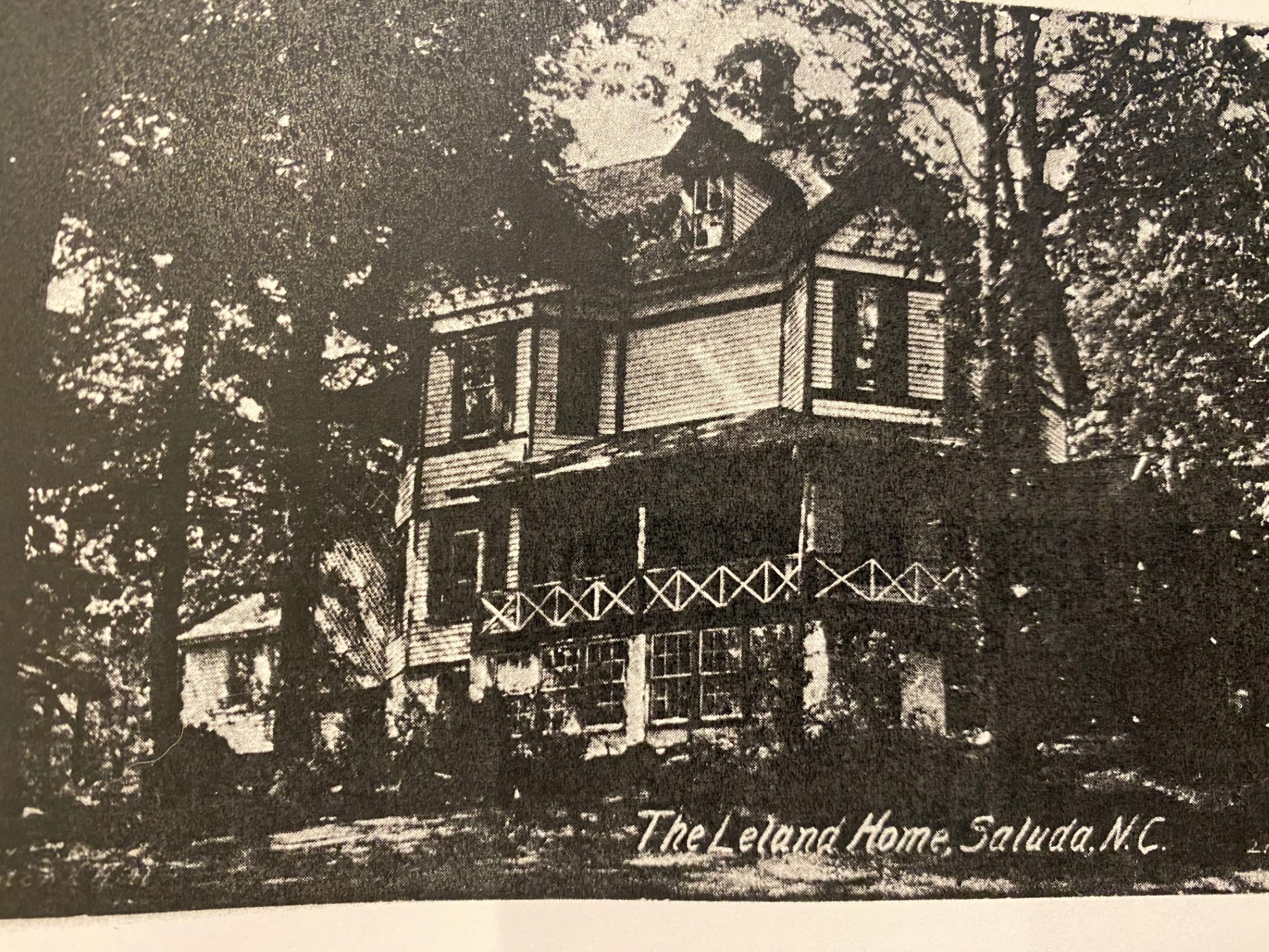
The story of The Saluda Inn begins with one of Saluda's most consequential early citizens: Dr. E.B. Goelette, the town's very first doctor and druggist. In the 1880s, as Saluda was emerging as a mountain destination following the arrival of the Western North Carolina Railroad, Dr. Goelette constructed the original building at 229 Greenville Street — a handsome Queen Anne-style private residence that stood as one of the most prominent addresses in the young town. Perched at 2,100 feet in the Blue Ridge foothills, just 35 miles south of Asheville, Saluda was already drawing visitors seeking relief from the summer heat of the Carolina lowlands, and Goelette's home occupied a prime position at the heart of it all. Goelette's dual role as pharmacist and doctor made him a pillar of early Saluda life — a community builder in the truest sense, tending to the health of his neighbors while investing in the town's physical fabric. The home he built reflected the Victorian craftsmanship and mountain character that still defines historic Saluda today.
1914
Mrs. Louisa A. Leland Opens the Inn
In 1914, Mrs. Louisa A. Leland acquired the Goelette property and hired local builder Luther Thompson to substantially enlarge and remodel the home into a Colonial Revival-style establishment. When she opened the doors to guests that same year, she named the inn The Charlton Leland — in honor of her husband, Charlton Leland. Saluda in 1914 was at the height of its fame as a mountain resort. Eight passenger trains arrived in Saluda each day, delivering vacationers, health-seekers, and travelers from across the Carolinas and beyond. The town supported no fewer than 37 boarding houses and inns to accommodate them — and The Charlton Leland stood among the finest. It went on to become the last of the "great inns" built during Saluda's boom as a mountain tourist destination. The historic structure still stands today and was added to the National Register of Historic Places in 2006, listed as the Charlton Leland House — also known as the Dr. E.B. Goelette House and the Saluda Inn. Over its long lifespan, the inn has carried all three names, each one a chapter in the same remarkable story.
1900s–1940s
Smith Hill, the Baby Hospital & the Summer Seminars
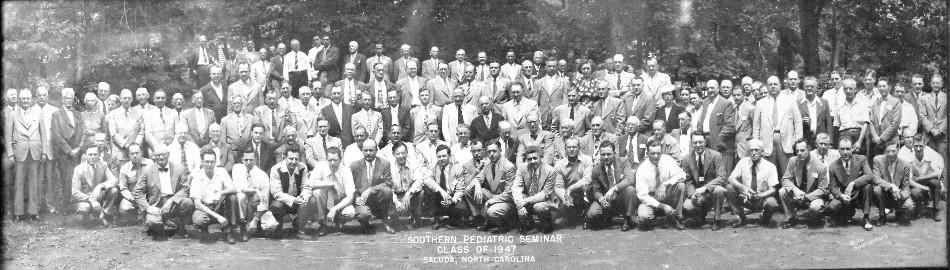
Among the most remarkable chapters in Saluda's history is the story of Smith Hill — a hilltop community just outside of town that became the unlikely home of a pioneering medical institution. Dr. Daniel Lesesne Smith, a prominent local physician and community leader for whom Smith Hill is named, was central to the community that grew up around this elevated, cool-aired enclave above the valley. Dr. Smith established a baby hospital in Saluda — one of the earliest institutions of its kind in the Carolina mountains — dedicated to the care of infants at a time when infant mortality remained a grave concern throughout the American South. To advance this mission, Dr. Smith organized and ran the Southern Pediatric Seminar, an annual gathering that brought physicians from across the region to Saluda each summer to learn the latest methods in infant and child care. The seminar ran for decades, drawing hundreds of doctors to these mountains to study what would come to be known as pediatrics. The Charlton Leland Inn played a quiet but essential role in this story: it provided lodging for the visiting physicians who came each summer to learn and to teach. For weeks at a time, the inn's rooms were filled not with vacationers but with doctors — men who had traveled to Saluda to be part of something that would save lives far beyond these mountains. The photograph above is the class portrait of the Southern Pediatric Seminar, Class of 1947 — more than a hundred physicians gathered on the grounds of Saluda, North Carolina. It is a chapter of Saluda's history that speaks to something deeper than tourism: a mountain town, elevated in more ways than one, that became a place of healing and learning at a pivotal moment in American medicine.
2020
Joel & Jay: A Vision Purchased
In 2020, Joel Kirby and Jay Burriss — two entrepreneurs with a shared passion for historic preservation, design, and genuine Southern hospitality — purchased the property at 229 Greenville Street with a bold vision: to transform it into a world-class boutique inn that honored the building's storied past while delivering a thoroughly modern luxury experience. The purchase came during one of the most challenging periods in recent history, but Joel and Jay saw not an obstacle but an opportunity — a chance to breathe new life into a landmark building and invest in the resilient community of Saluda.
June 2020 · The Starting Point
Before the Vision Could Begin
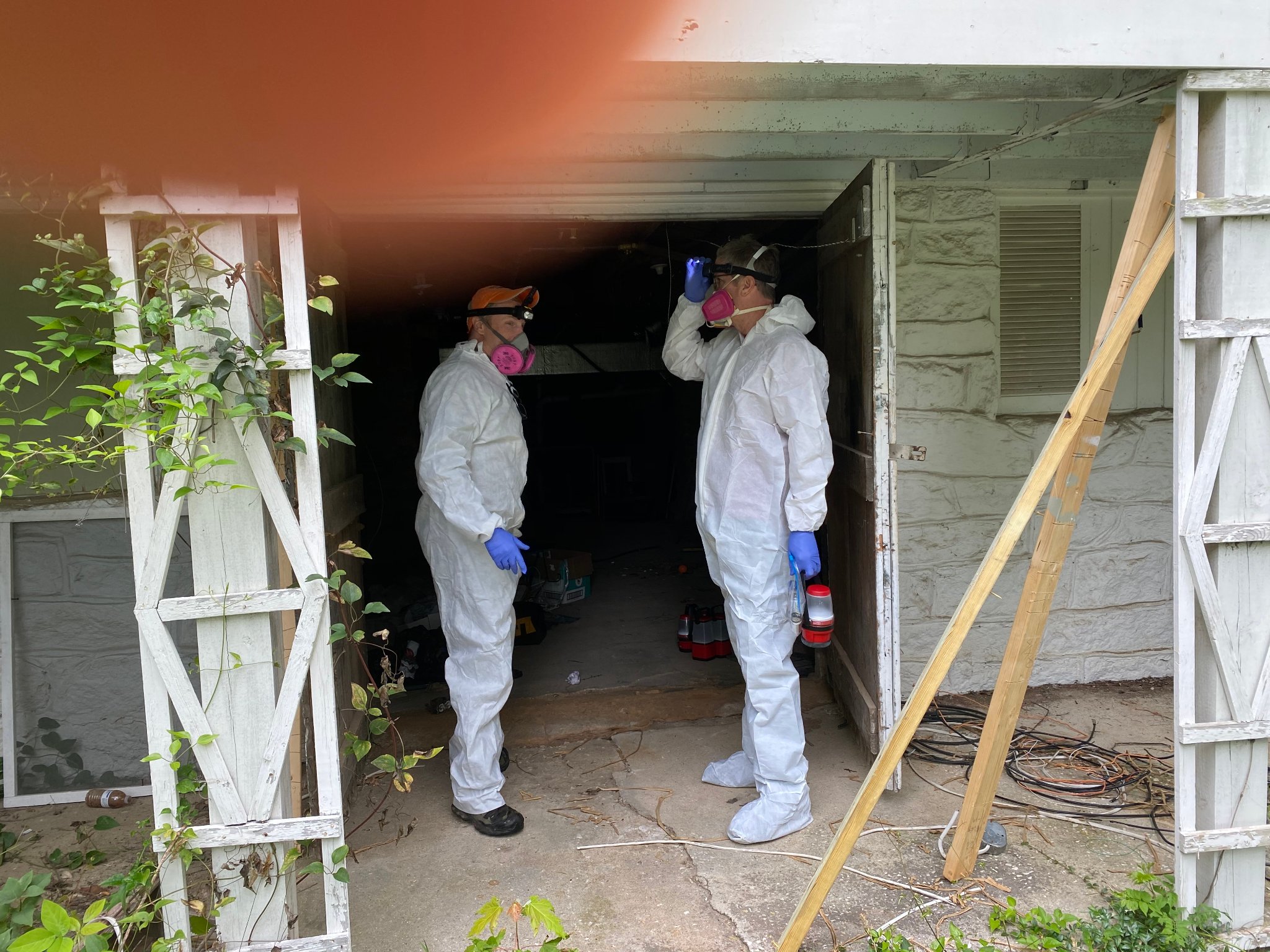
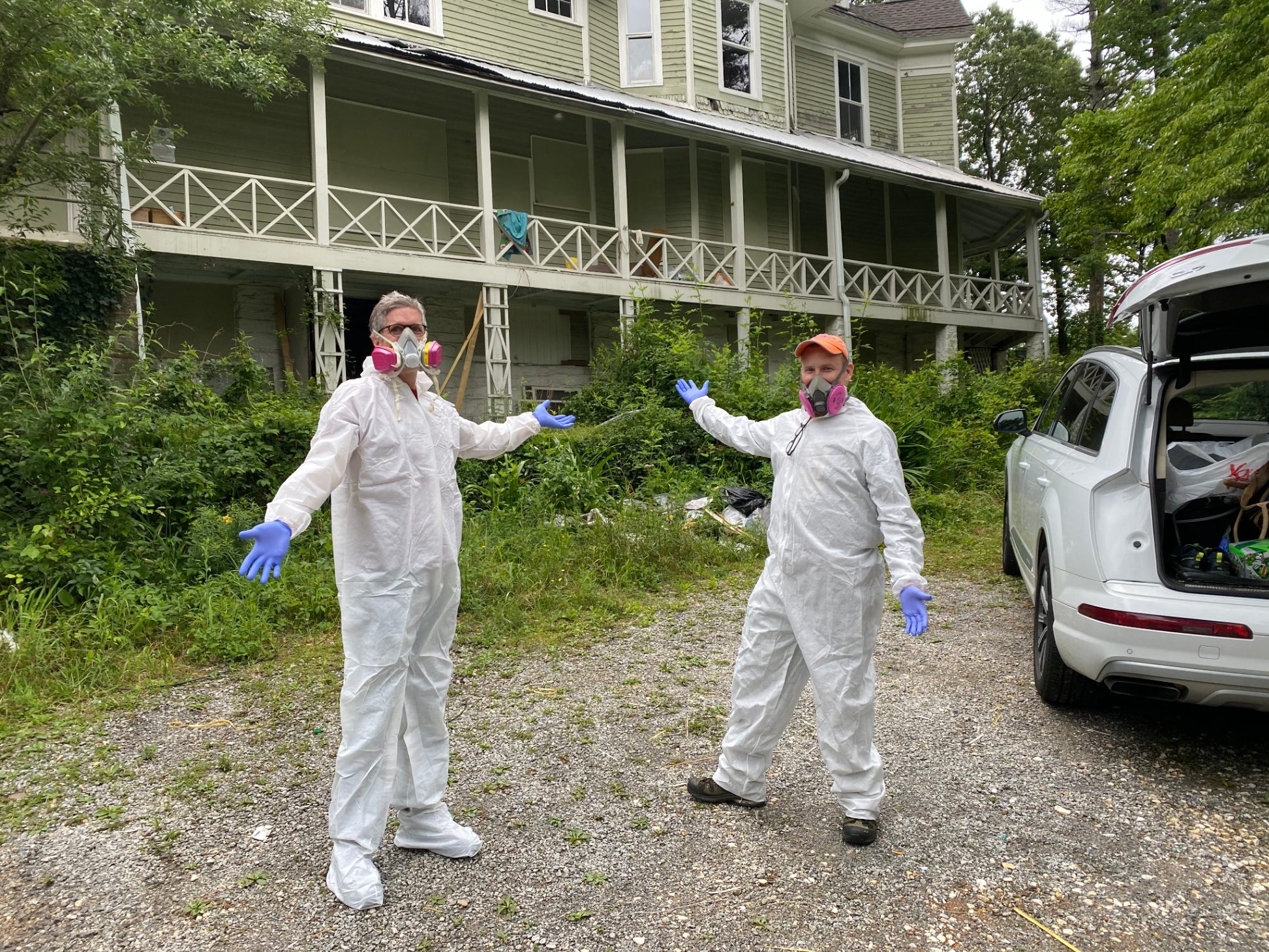
When Joel and Jay took possession of the property in June 2020, the inn had fallen into severe disrepair. Years of neglect had left every room filled with debris, trash, and abandoned belongings. Before a single renovation nail could be driven, the entire building required professional remediation — a full cleanout and deep cleaning carried out by a licensed remediation company. These photographs document the condition of the inn at the moment the transformation began.
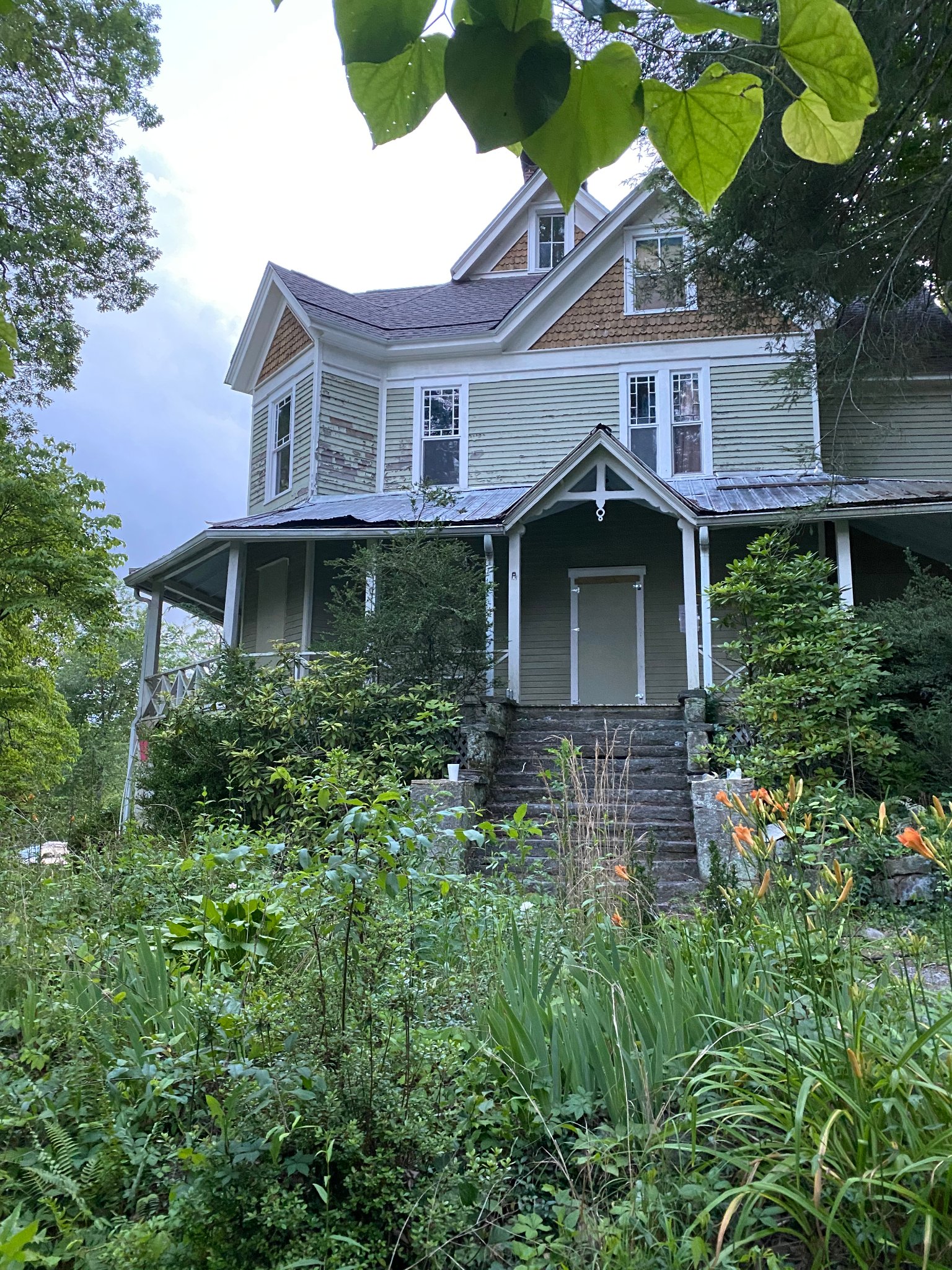
Front entrance — overgrown & neglected
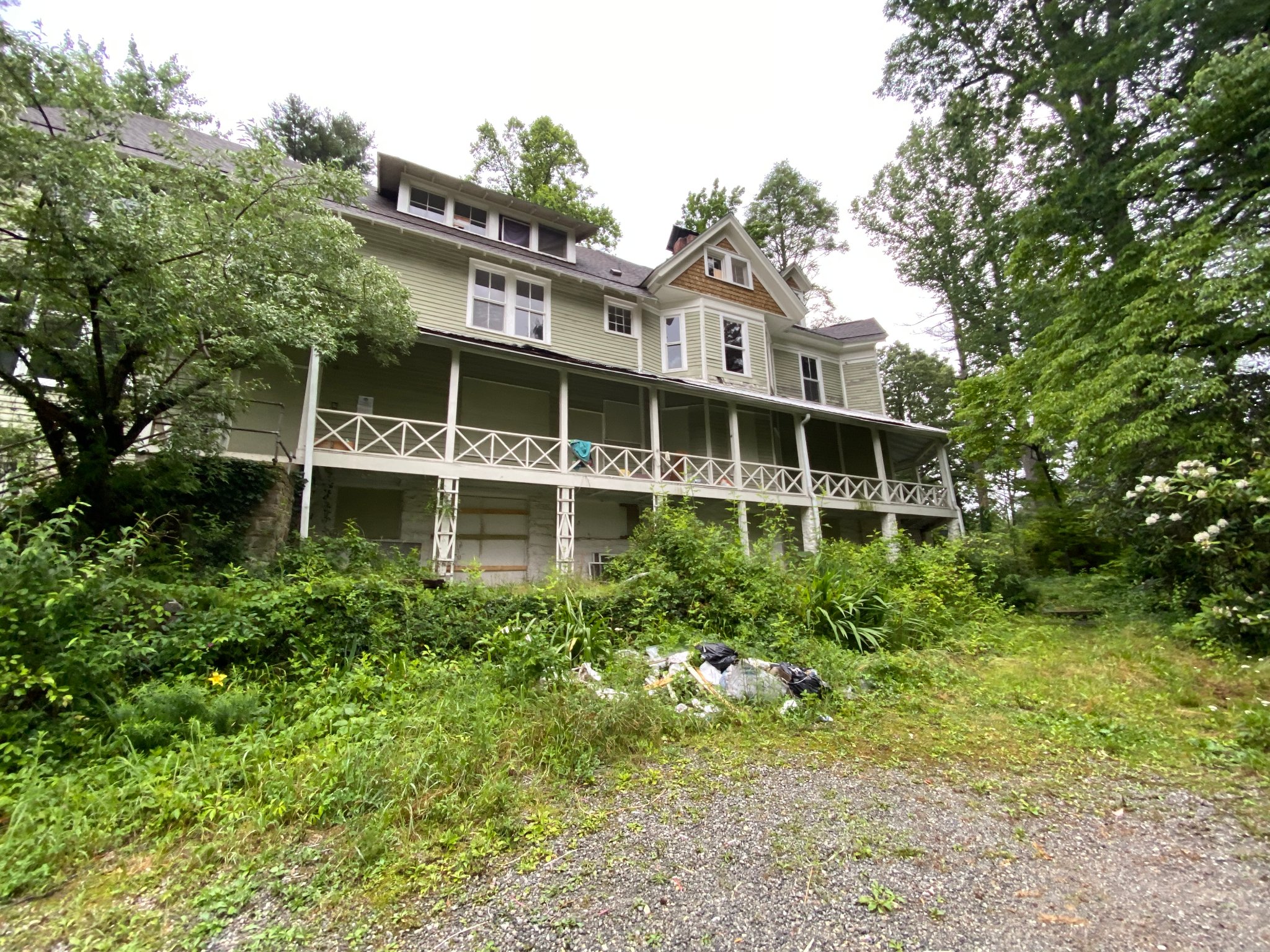
Wraparound porch — debris throughout
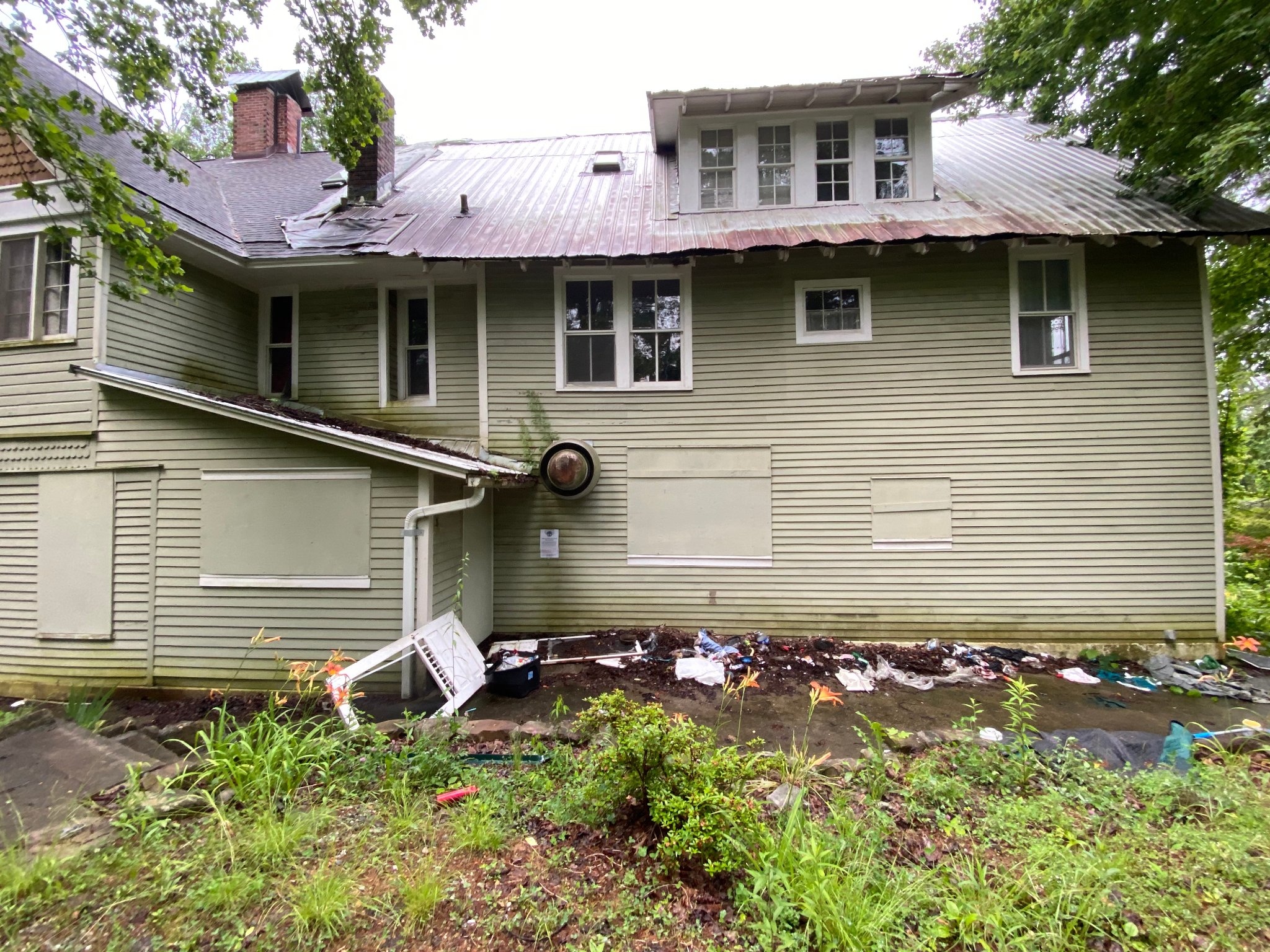
Rear exterior — boarded windows & damage
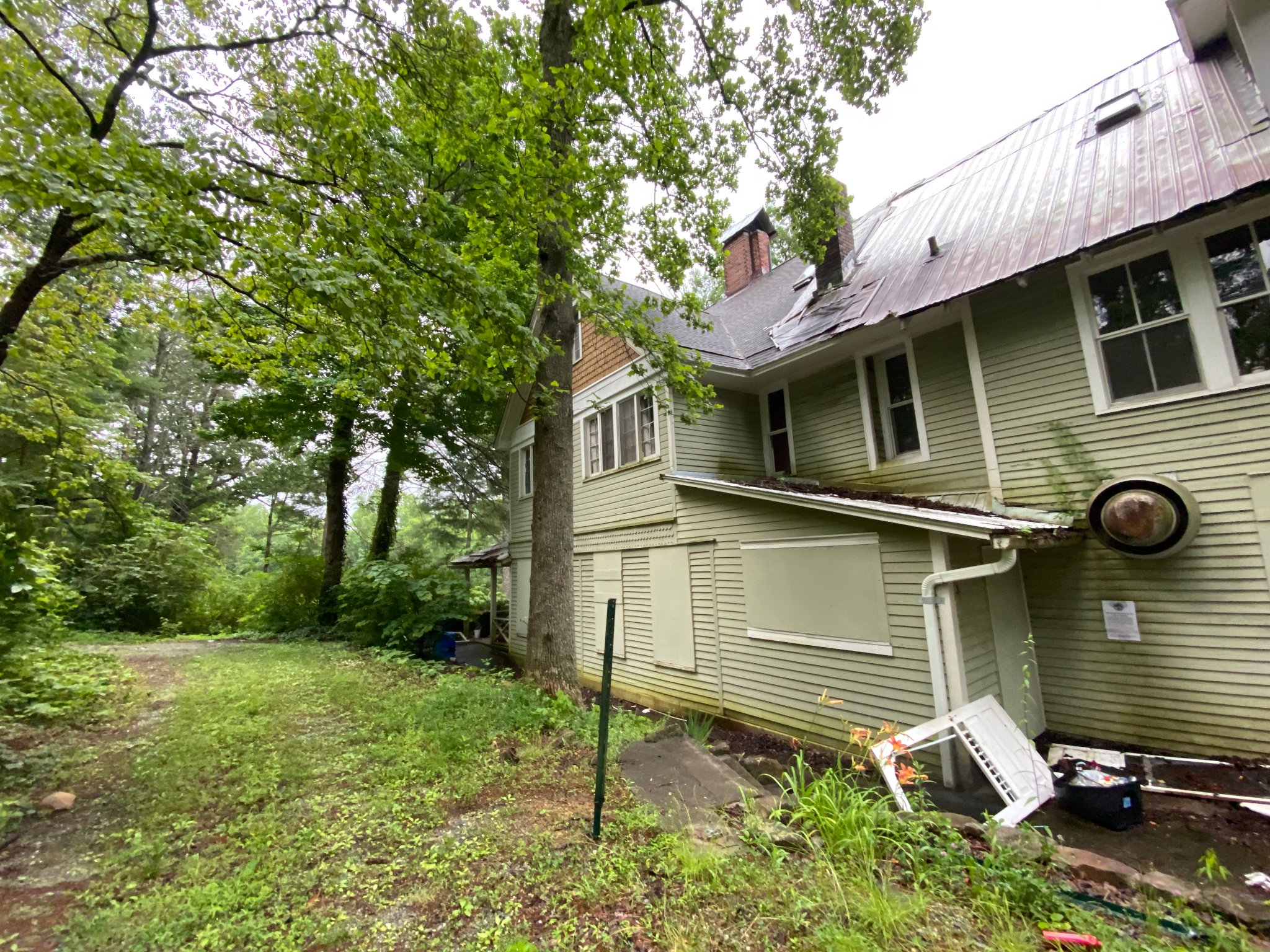
Side exterior — collapsed gutters & refuse
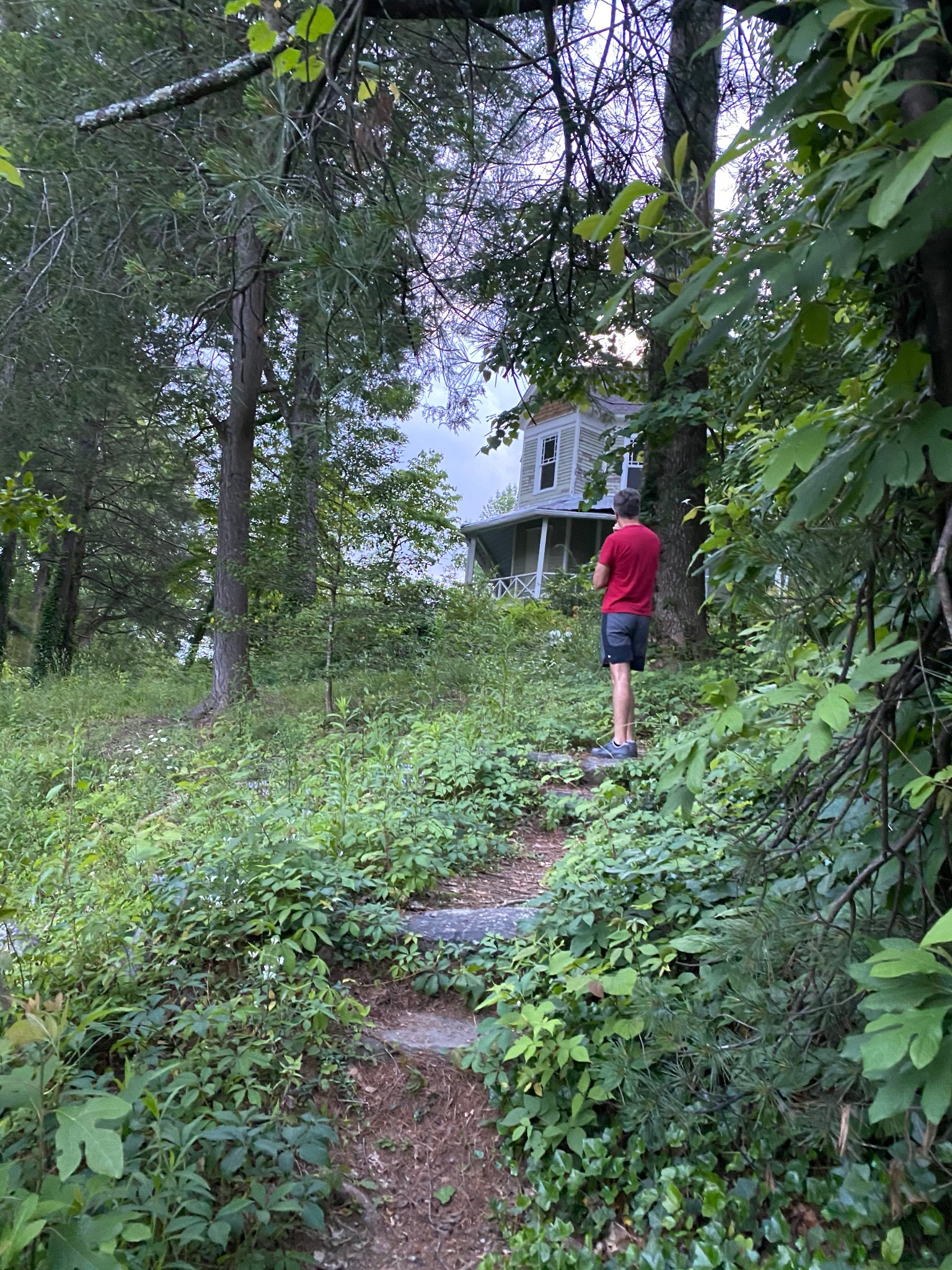
Grounds — overgrown & abandoned
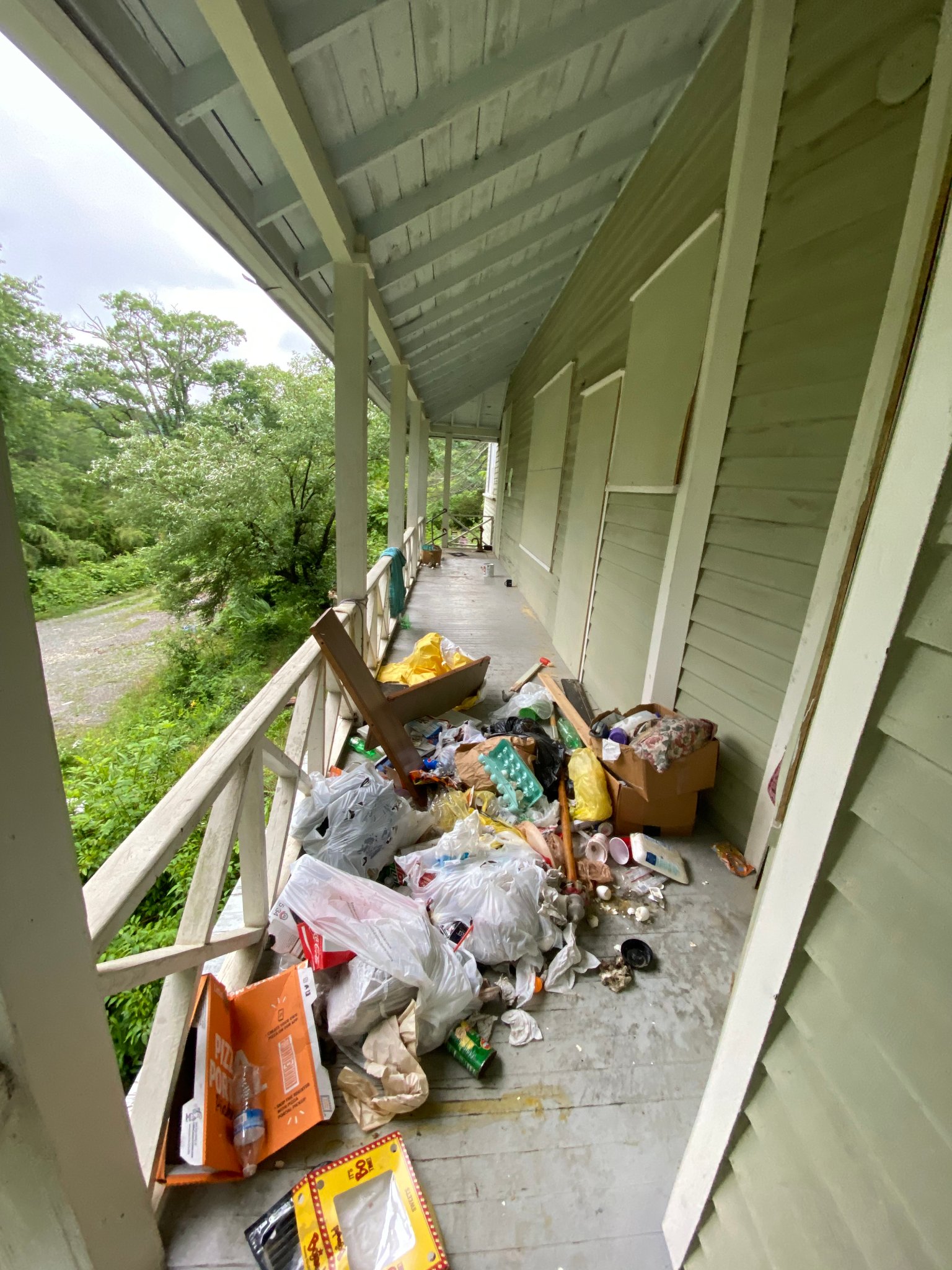
Porch — trash & debris piled throughout
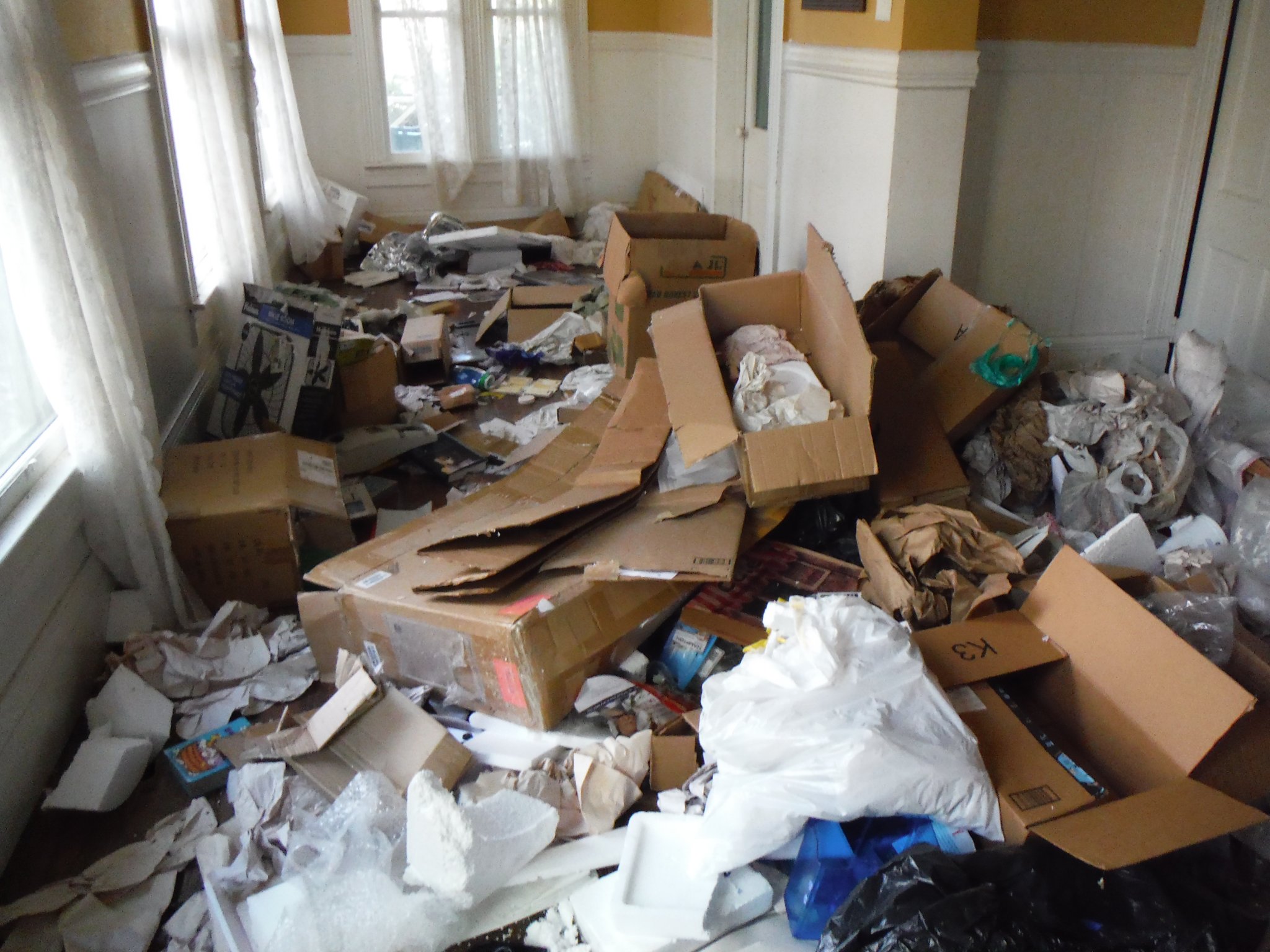
Interior — debris & cardboard
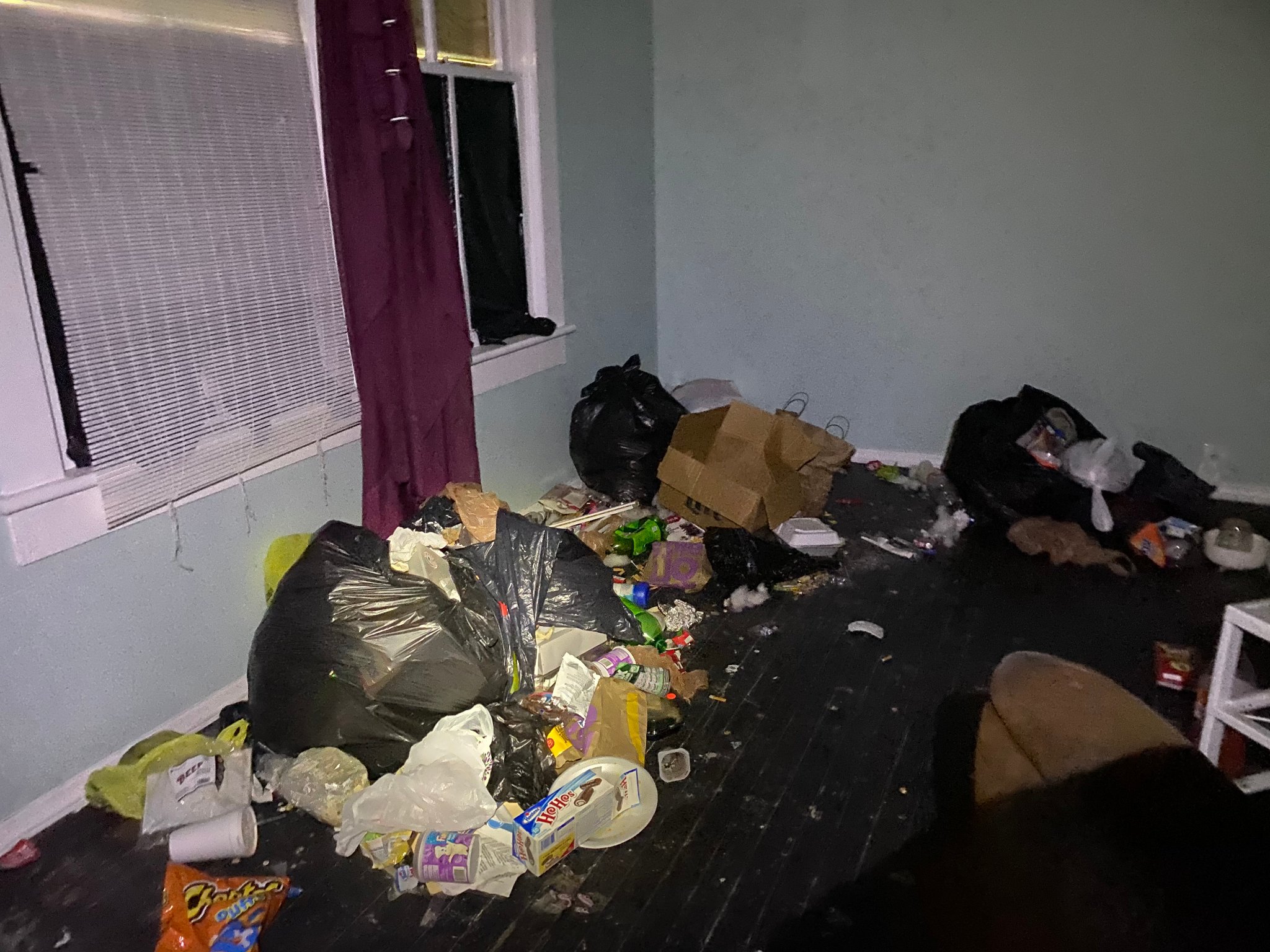
Guest room — trash bags & refuse
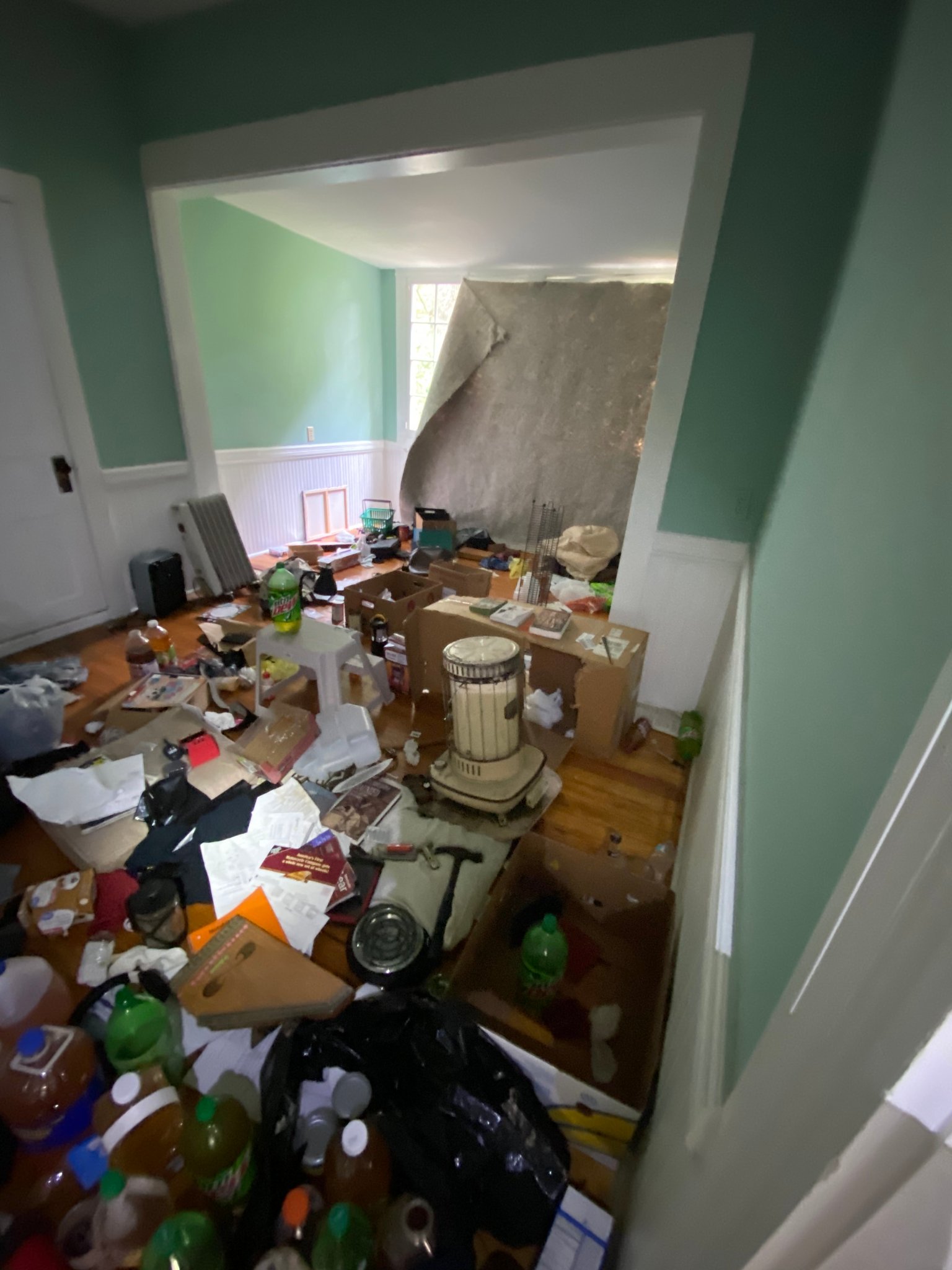
Upper hallway — clutter throughout
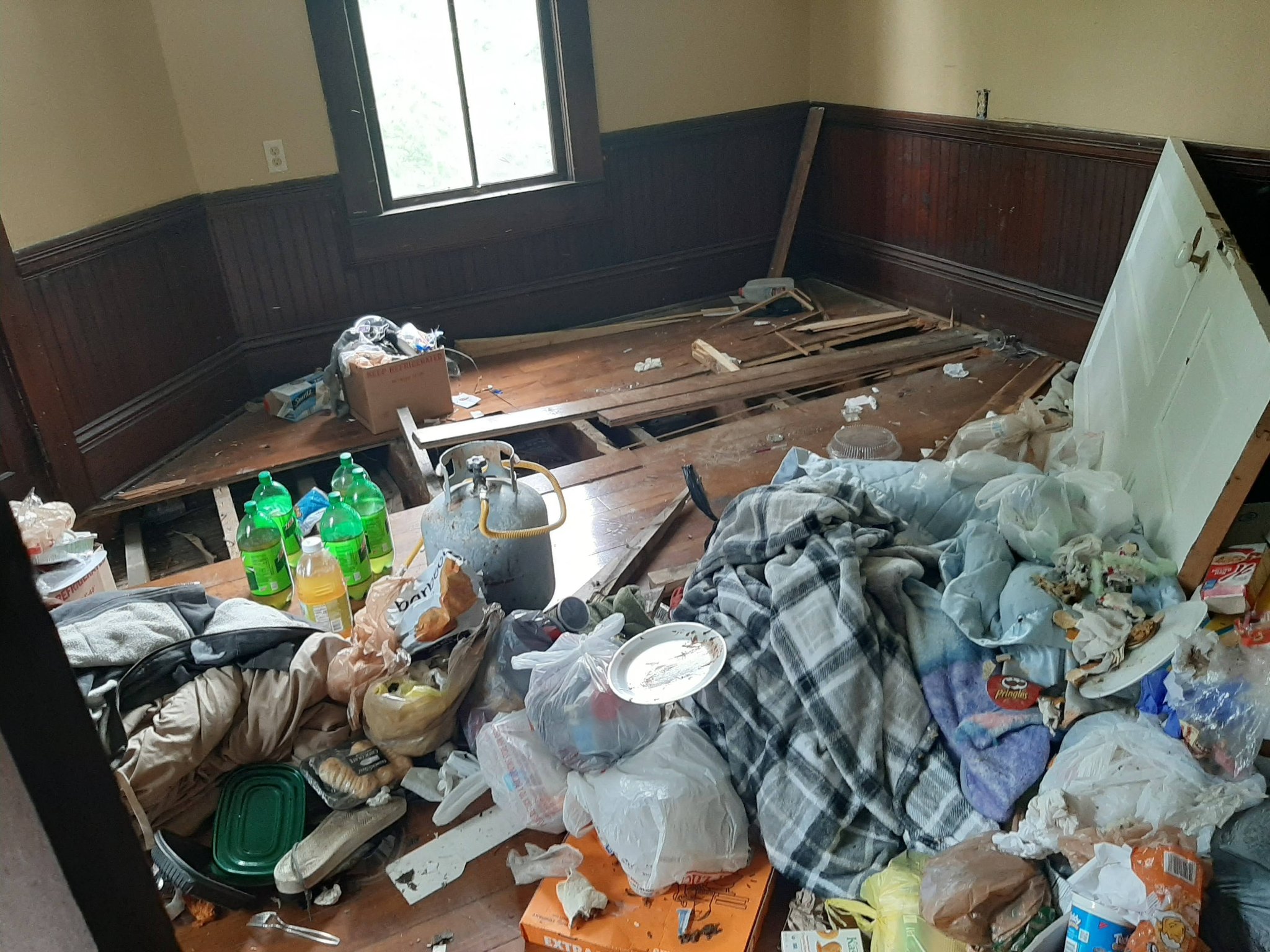
Room interior — abandoned belongings
All trash and debris was professionally removed and the inn was professionally cleaned by a licensed remediation company in 2020.
2020–2022
The Renovation: RE-juvenate, RE-inn-vent, RE-store
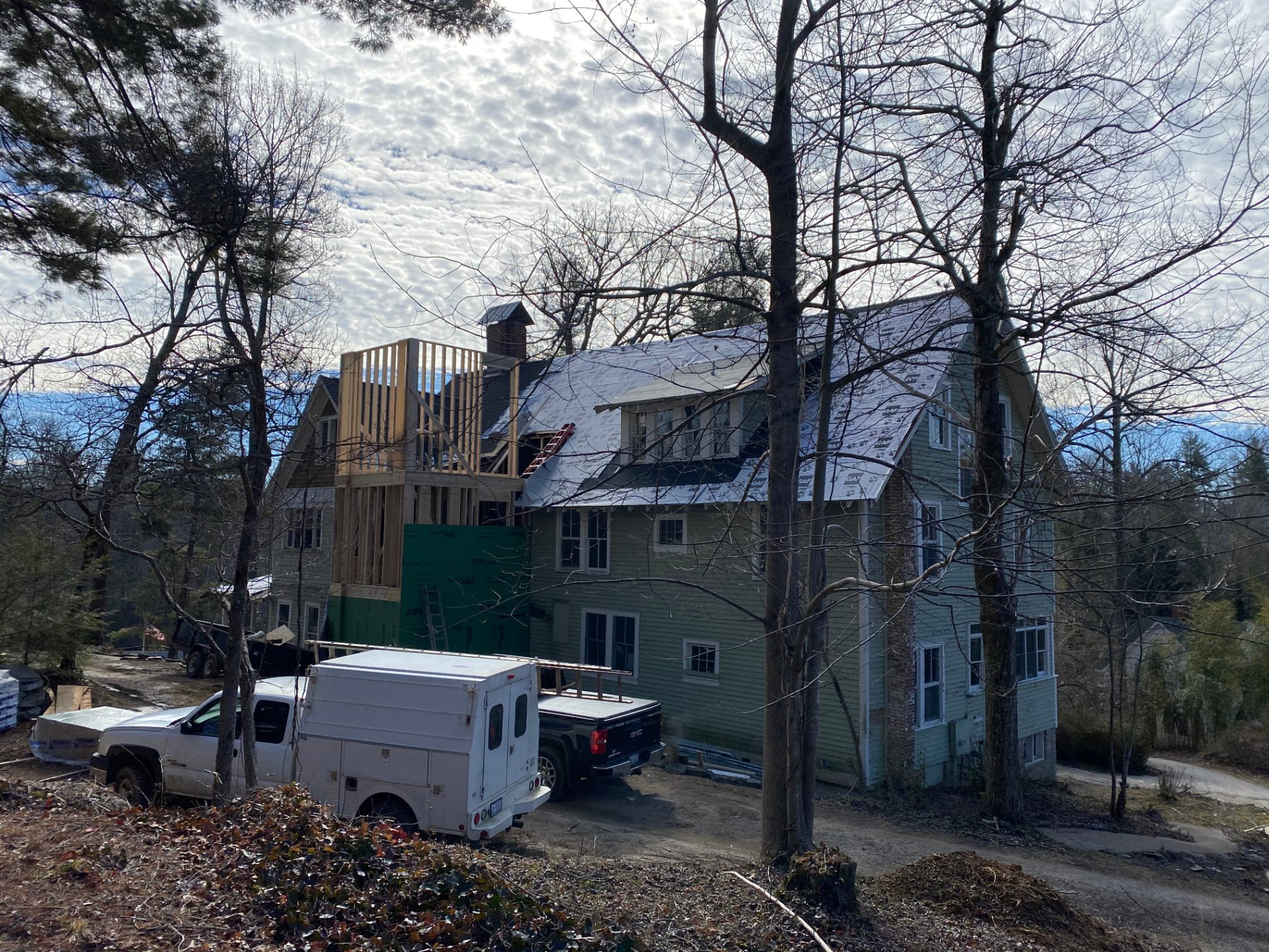
What followed was an ambitious, meticulous renovation spanning nearly two years. Joel and Jay's guiding philosophy — captured in their motto "RE-juvenate, RE-inn-vent, RE-store" — shaped every decision. Original architectural details were preserved and celebrated: exposed brick, original hardwood floors, soaring ceilings, and the building's distinctive Victorian bones. At the same time, every guest room and suite was outfitted with premium linens, individual climate control, Keurig coffee makers, mini-fridges, and high-speed Wi-Fi. A dedicated ADA-accessible suite and elevator access to common areas ensured the inn would welcome all guests. The crown jewel of the renovation was the creation of The Wine Cellar — a speakeasy-style bar tucked beneath the inn, featuring a full bar, curated music, and an intimate atmosphere unlike anything else in Western North Carolina.
2020–2022 · Construction Photos
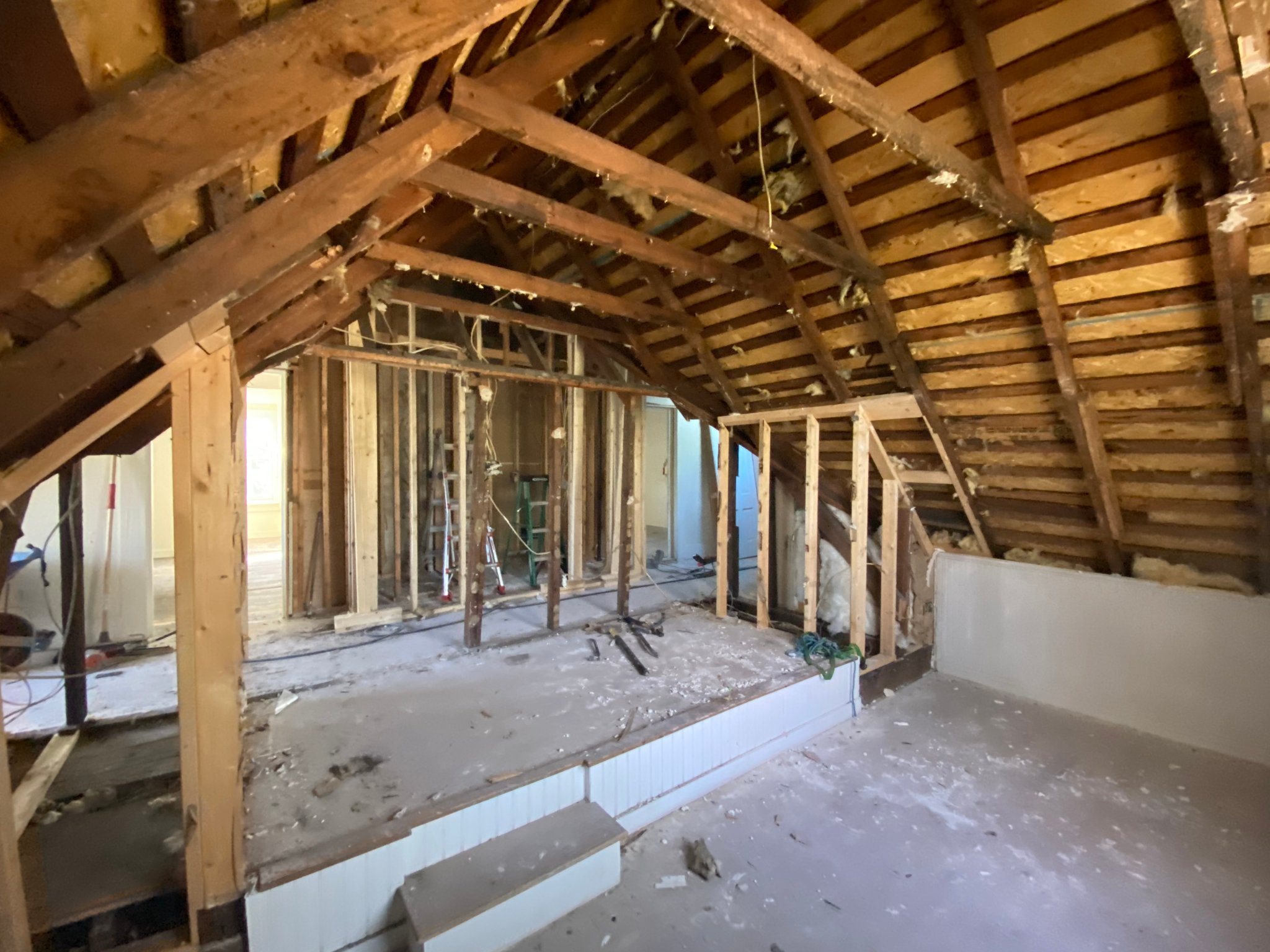
Third-floor attic — exposed rafters & framing
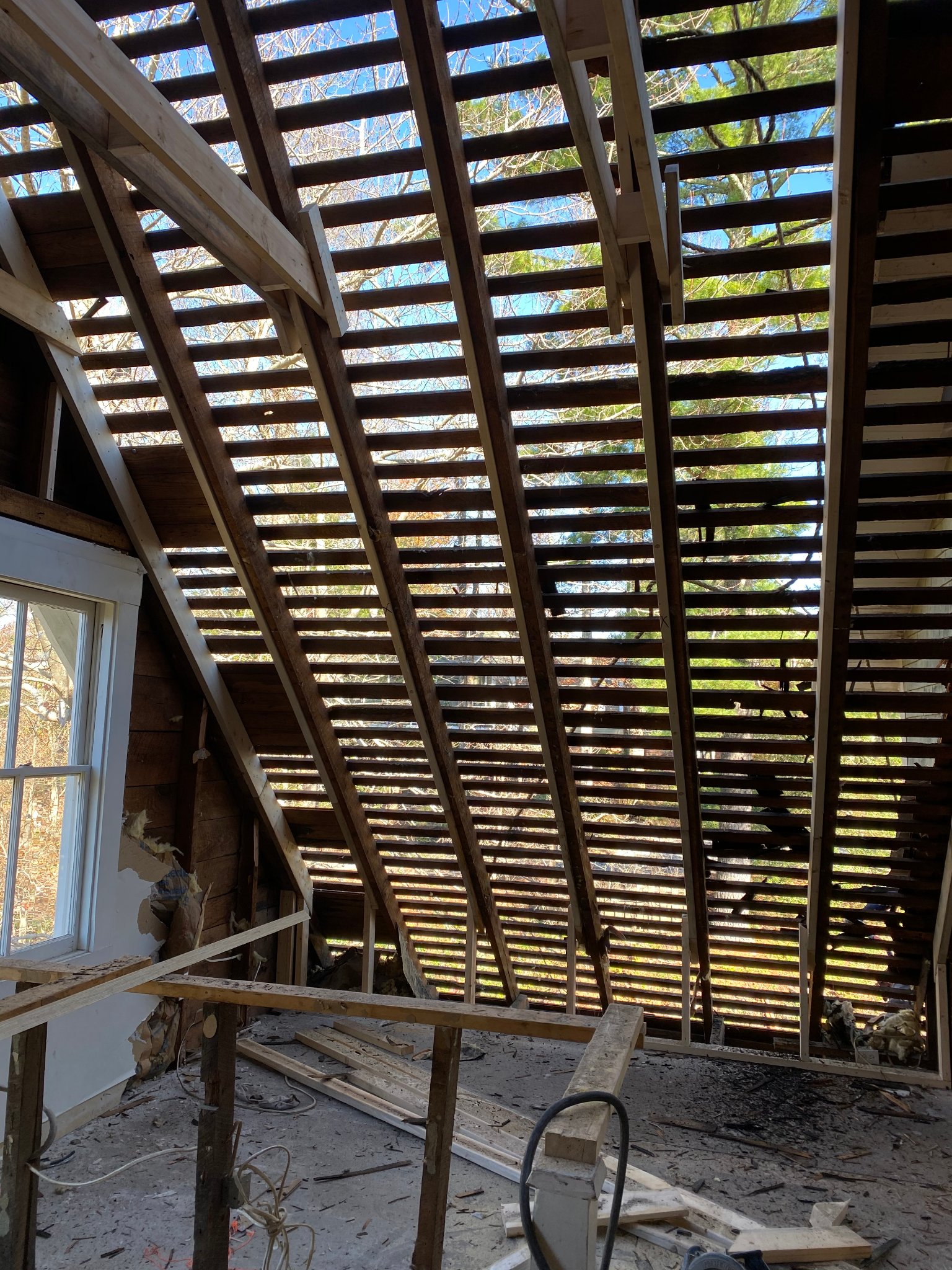
Roof structure — open to the sky during rebuild
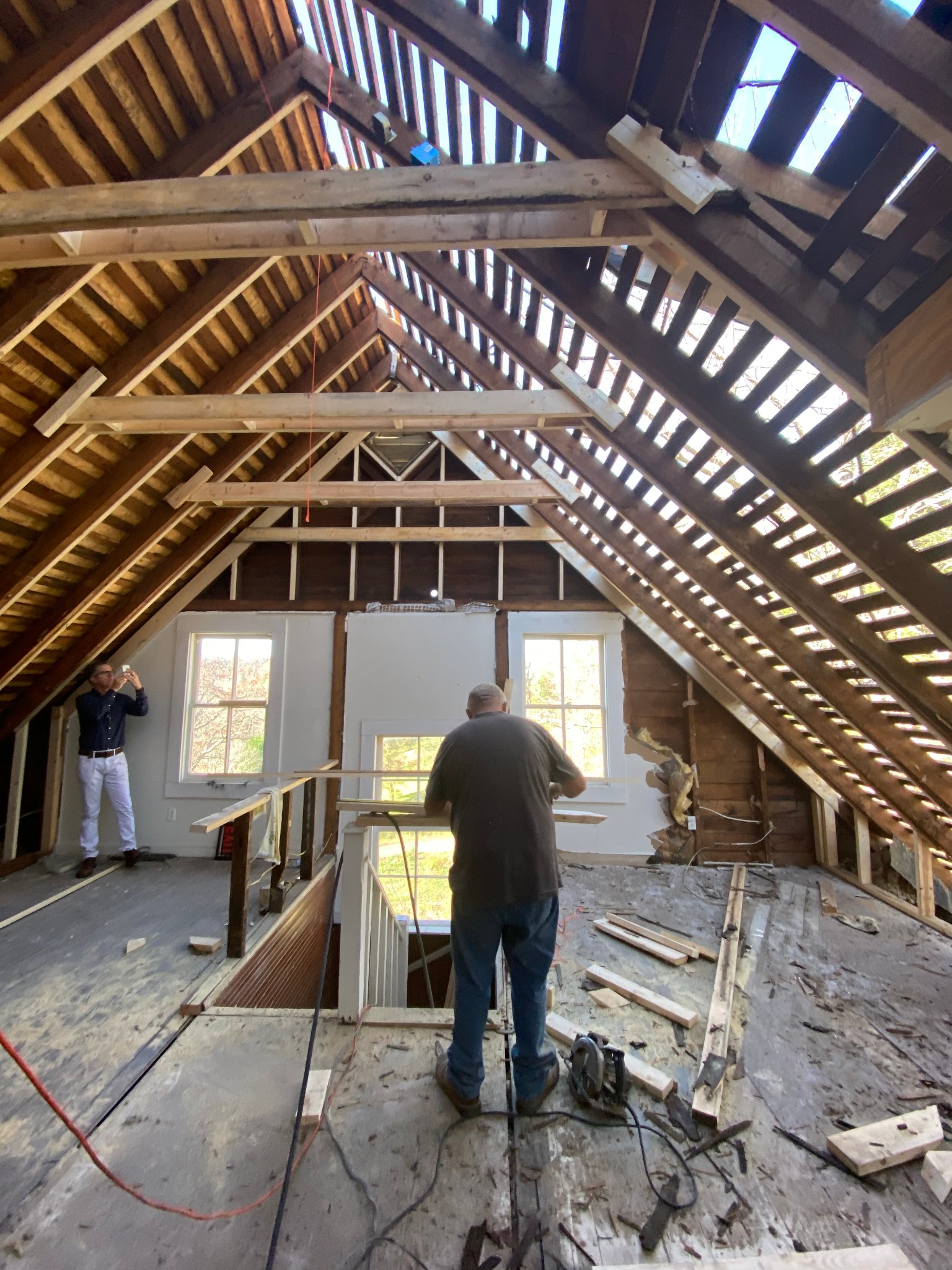
Upper floor — crew at work on framing & windows
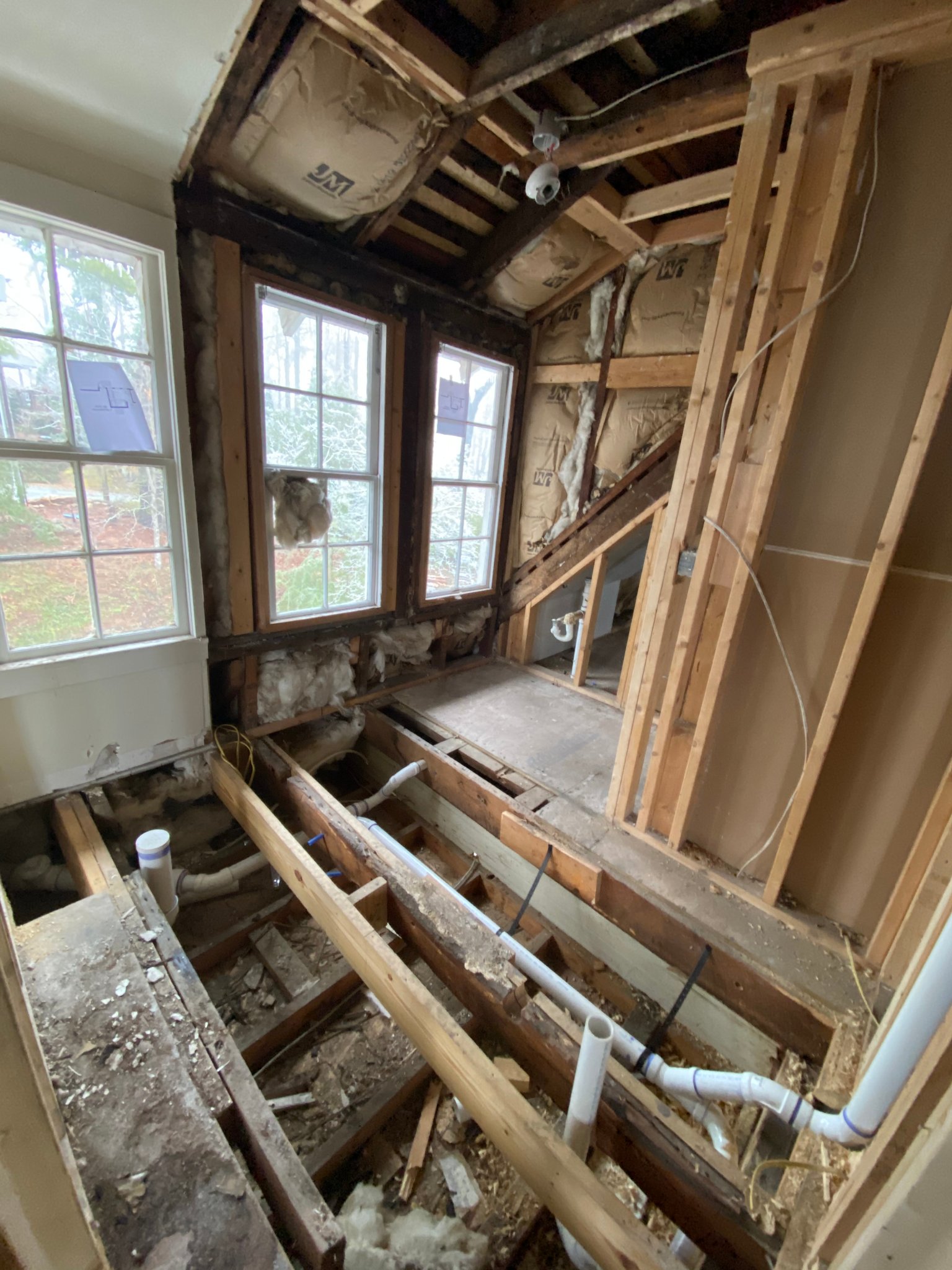
Guest room gut — subfloor & plumbing rough-in
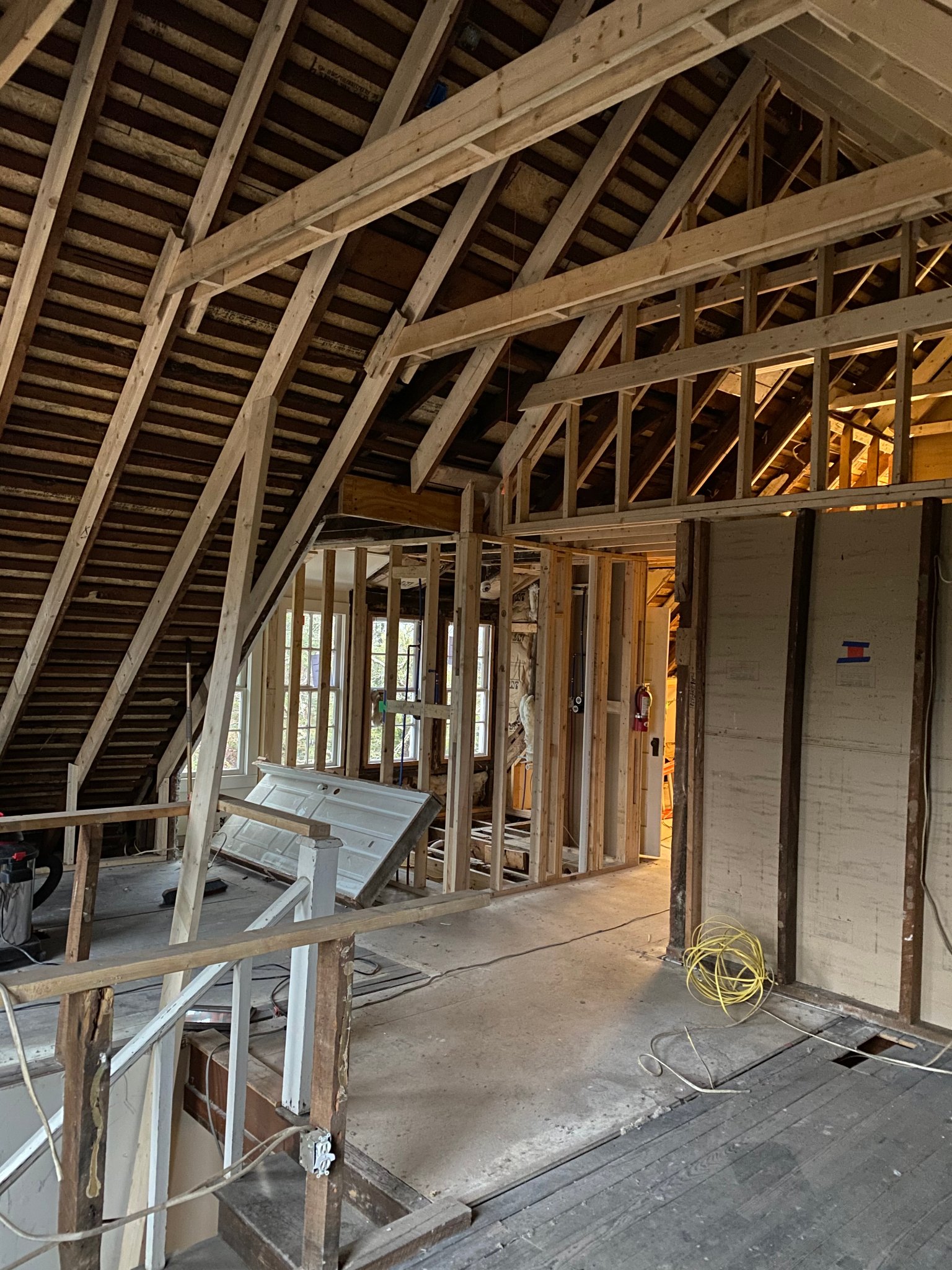
Third floor — new framing taking shape
Exterior mid-renovation — new addition framing & work crews on site
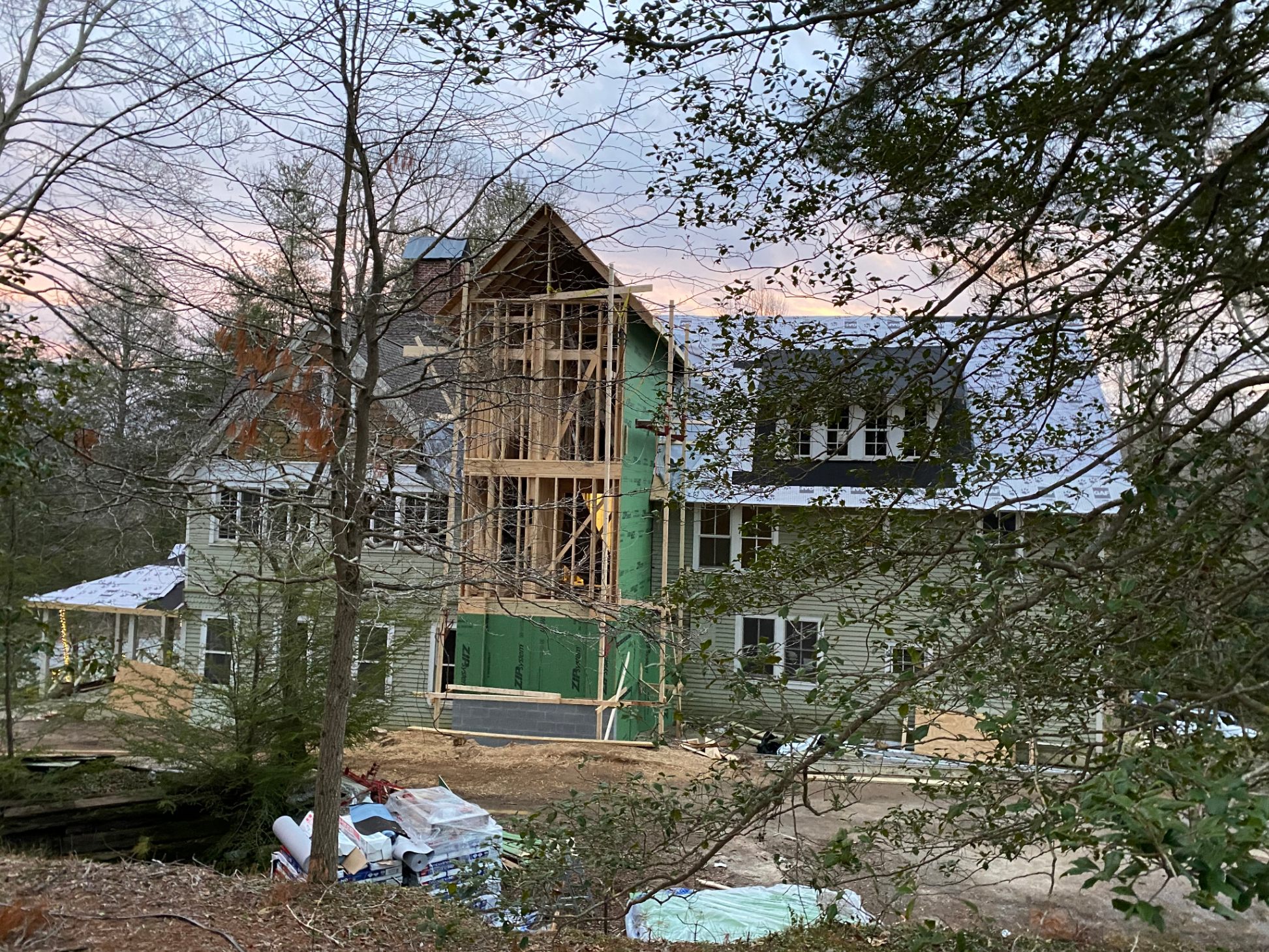
Exterior at dusk — addition framing & new roofline
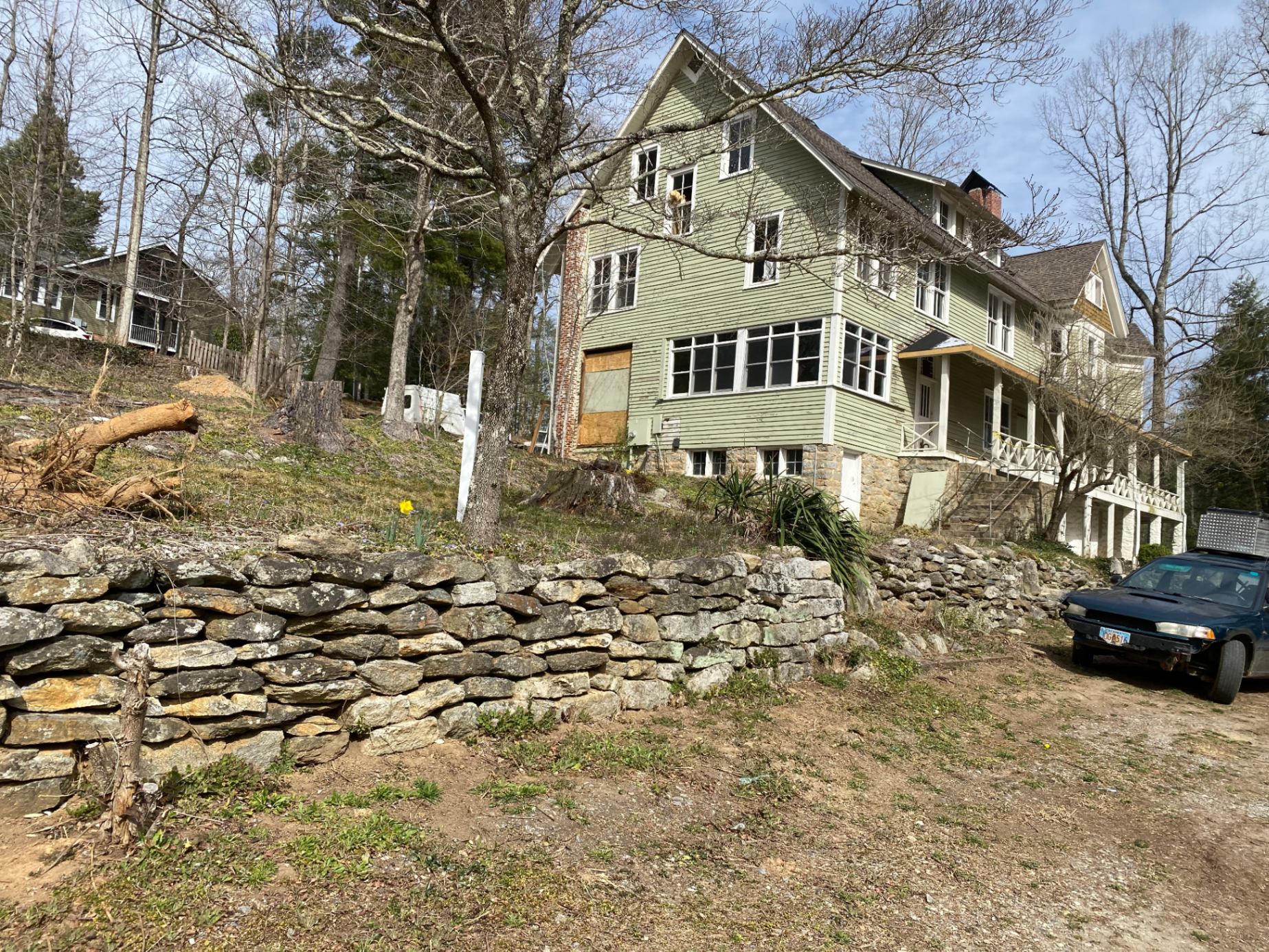
Exterior early renovation — stone retaining wall & original siding
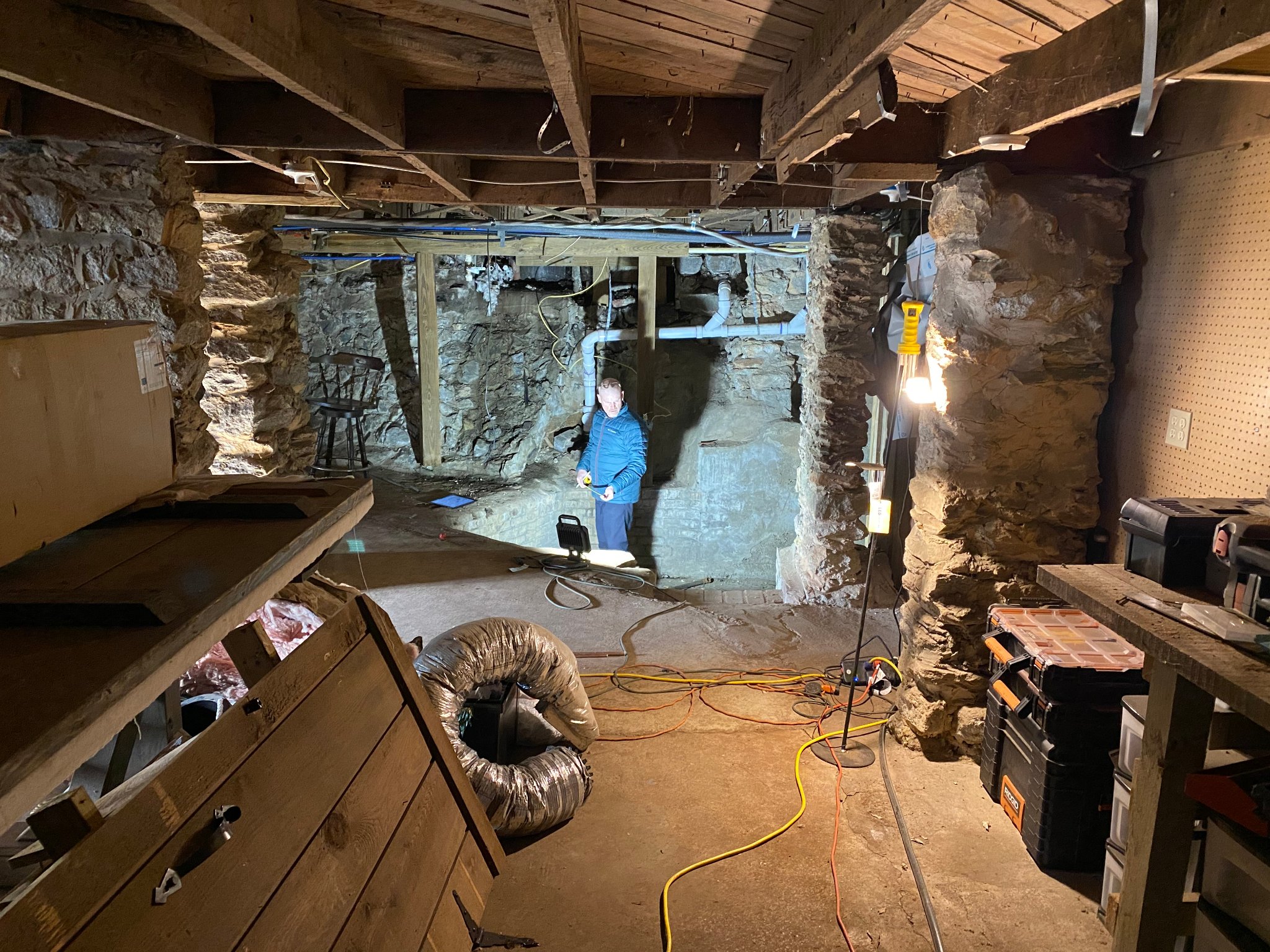
Wine Cellar excavation — original stone walls & exposed earth
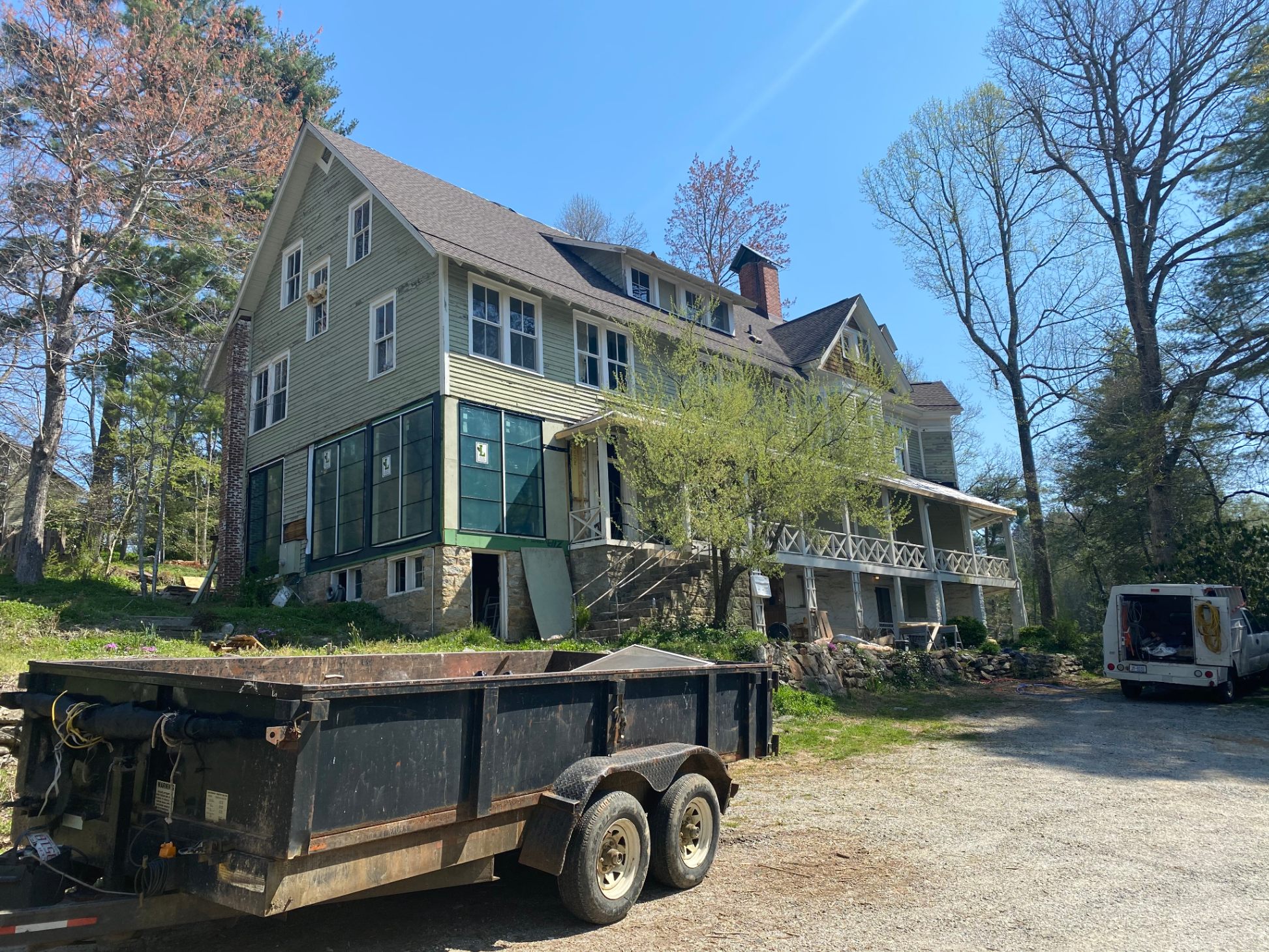
Exterior spring 2021 — new windows & dumpster on site
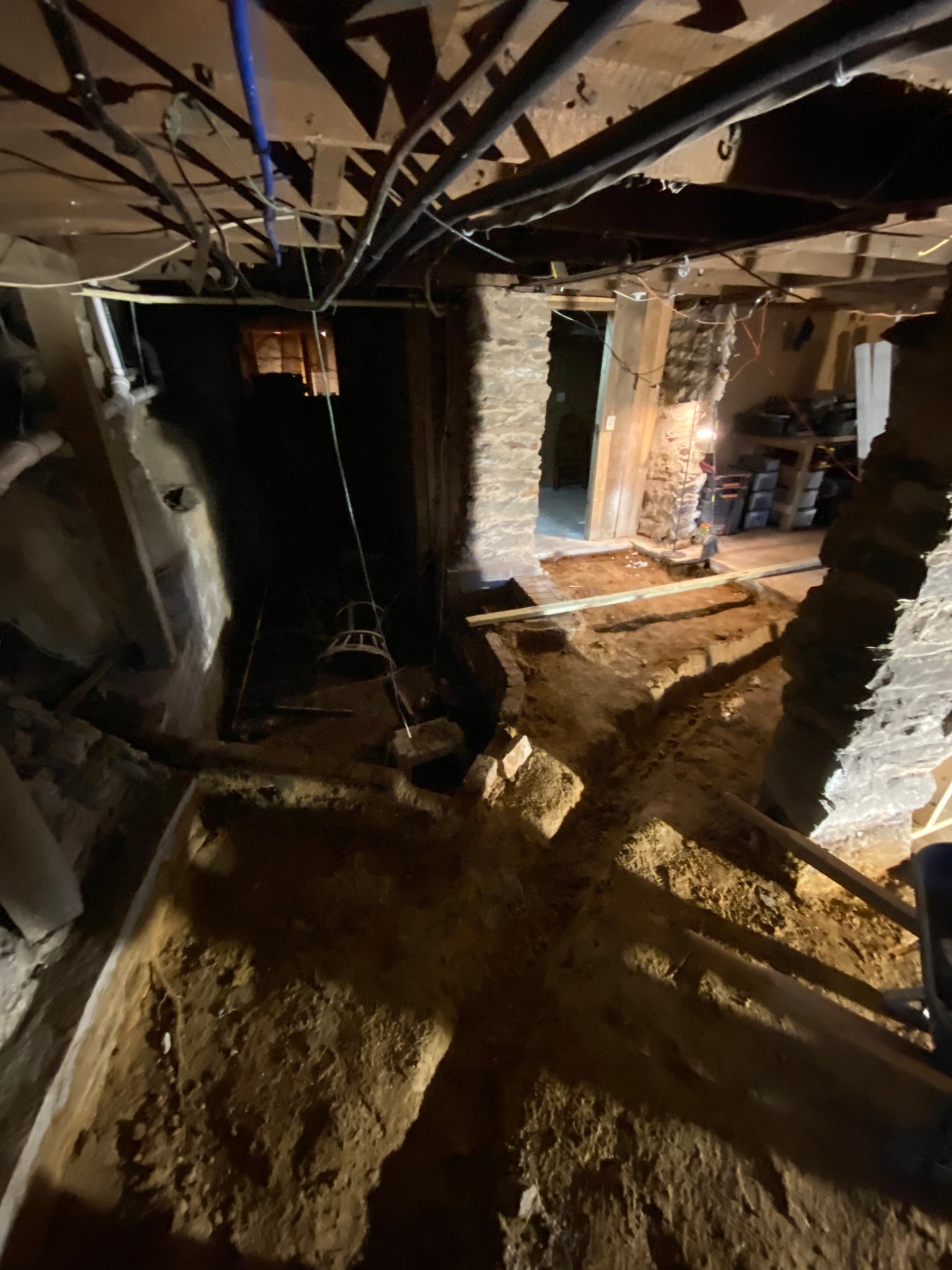
Wine Cellar rough-in — stone walls & plumbing taking shape
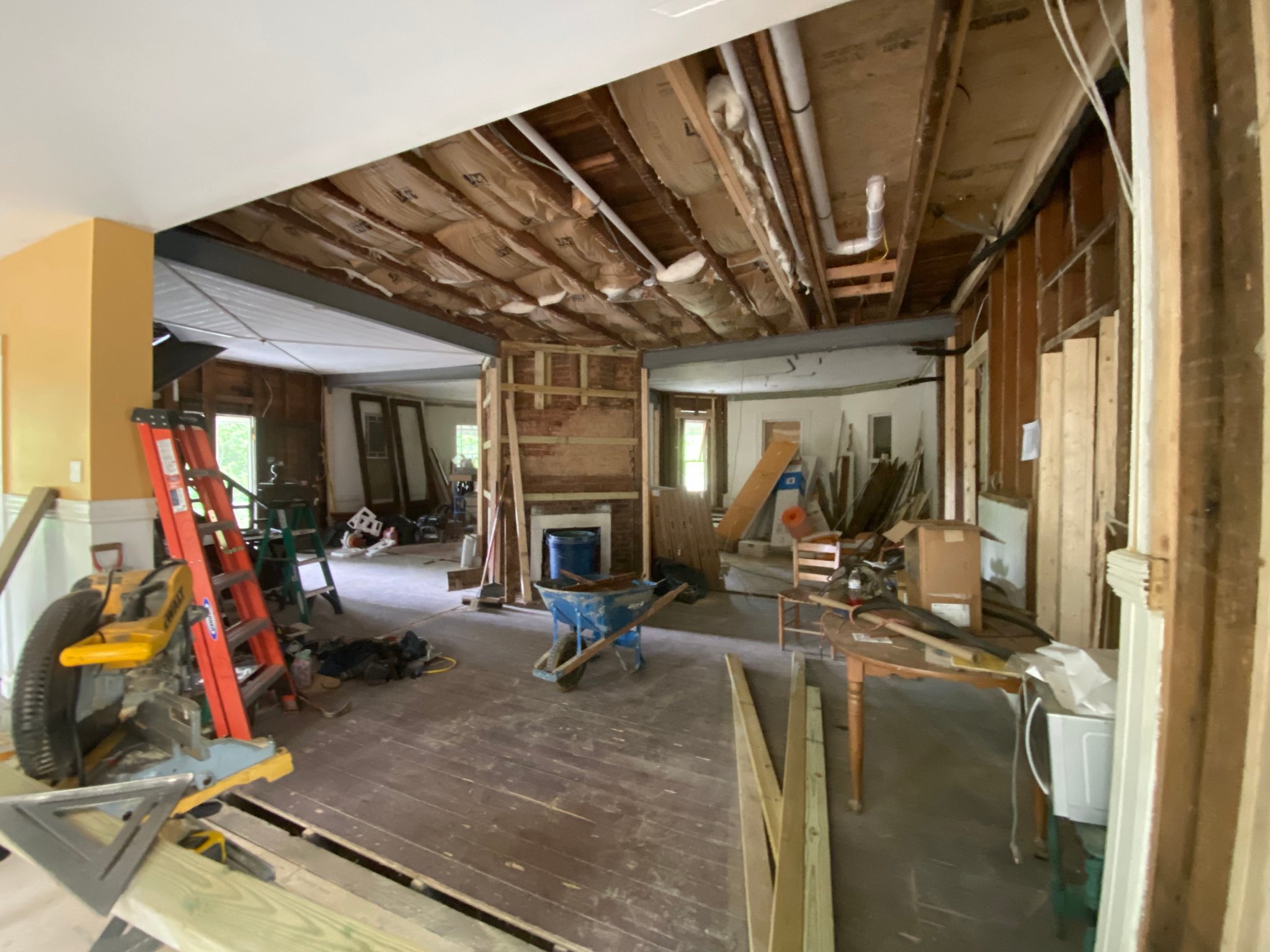
Main floor gut — original hardwood floors & exposed framing
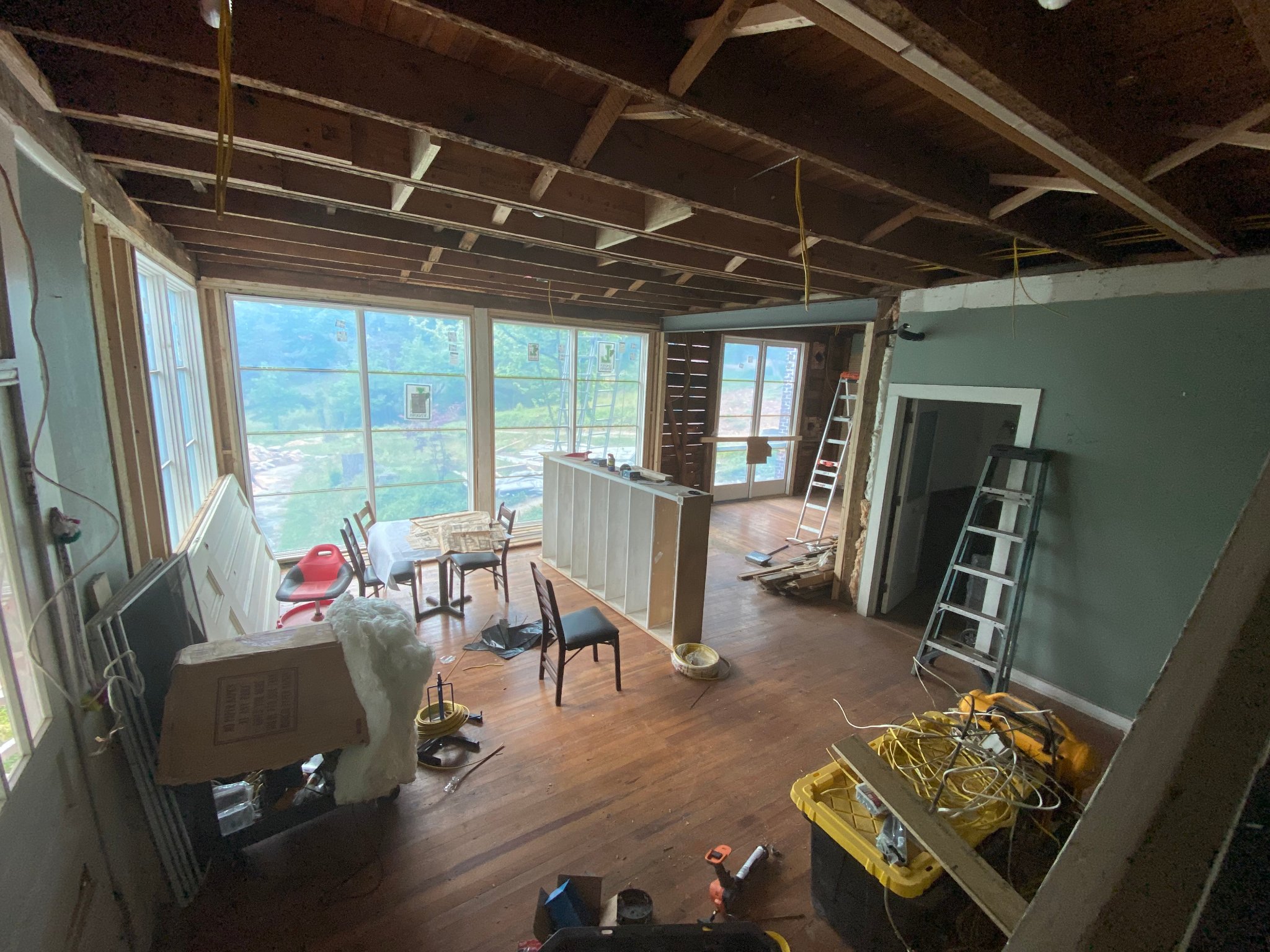
Second floor — new windows installed, mountain views revealed
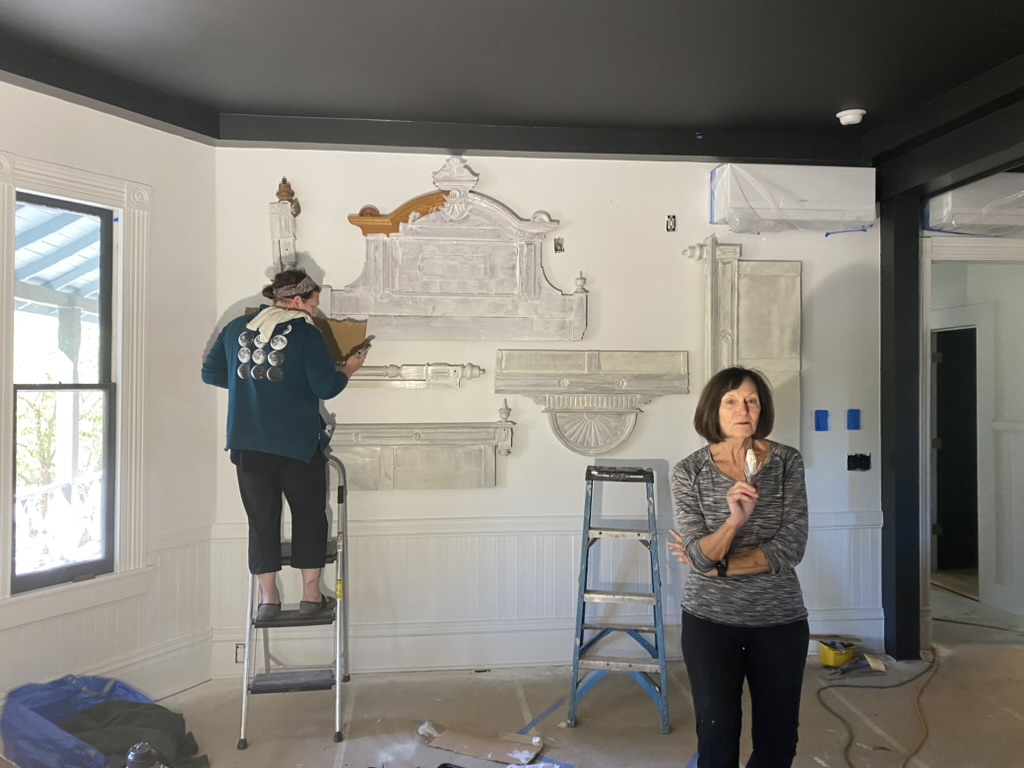
Interior renovation — antique headboard wall art taking shape
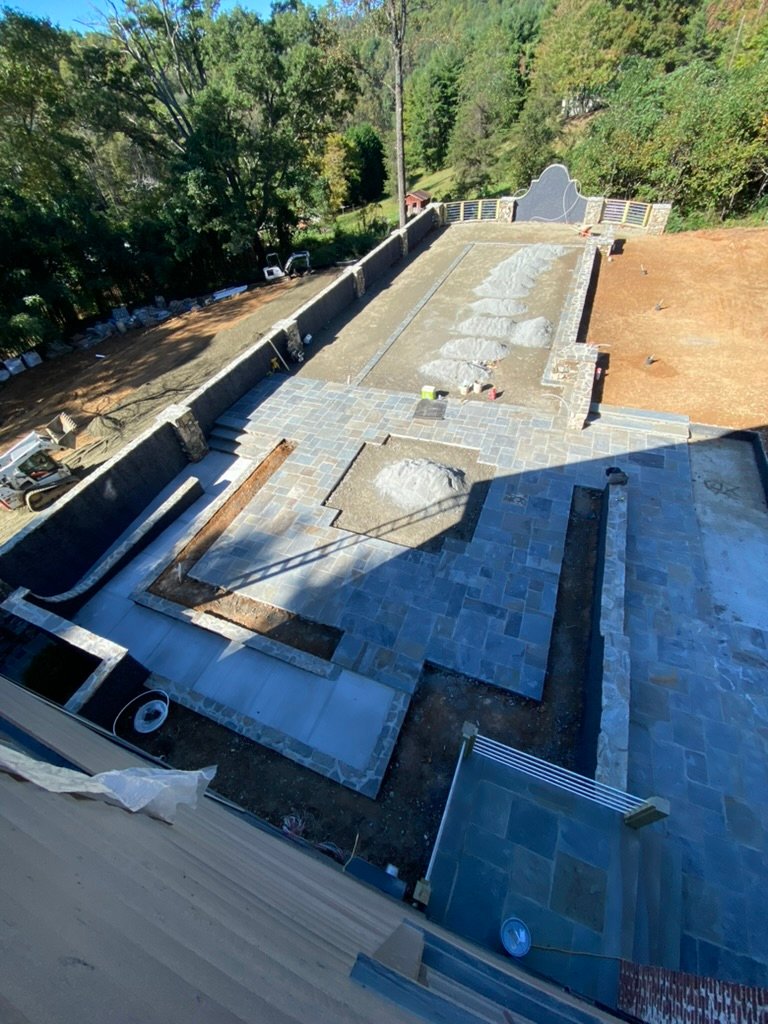
Grand Lawn Terrace construction — bluestone patio & stone retaining walls taking shape
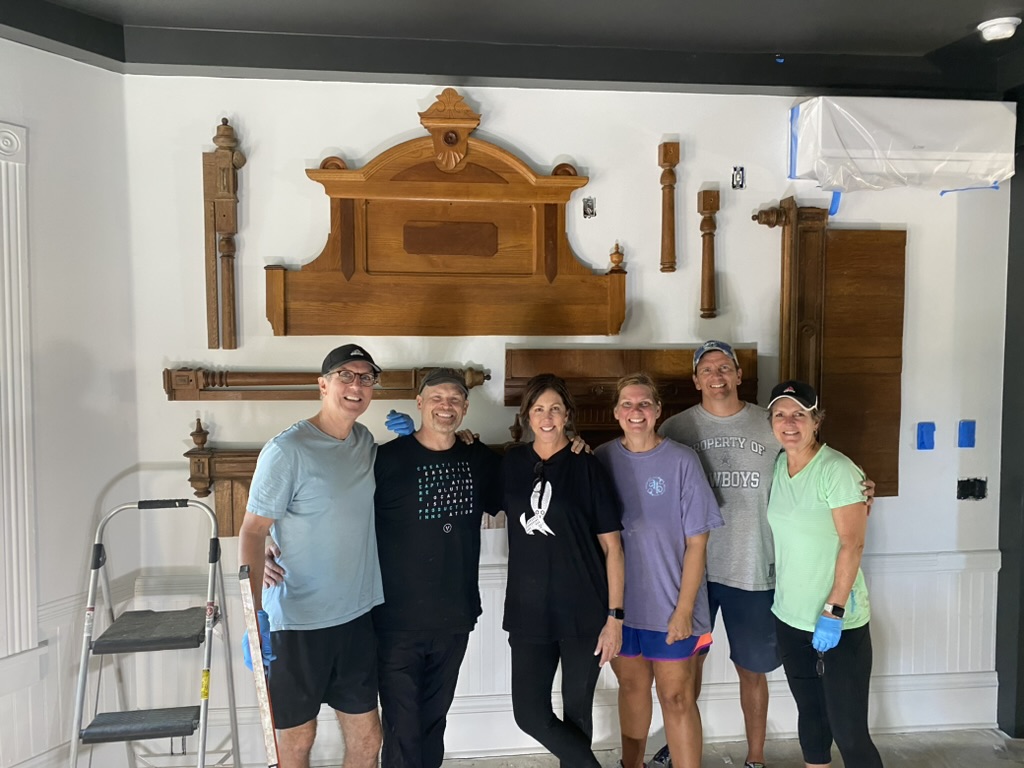
The crew — friends & family who helped bring The Saluda Inn to life
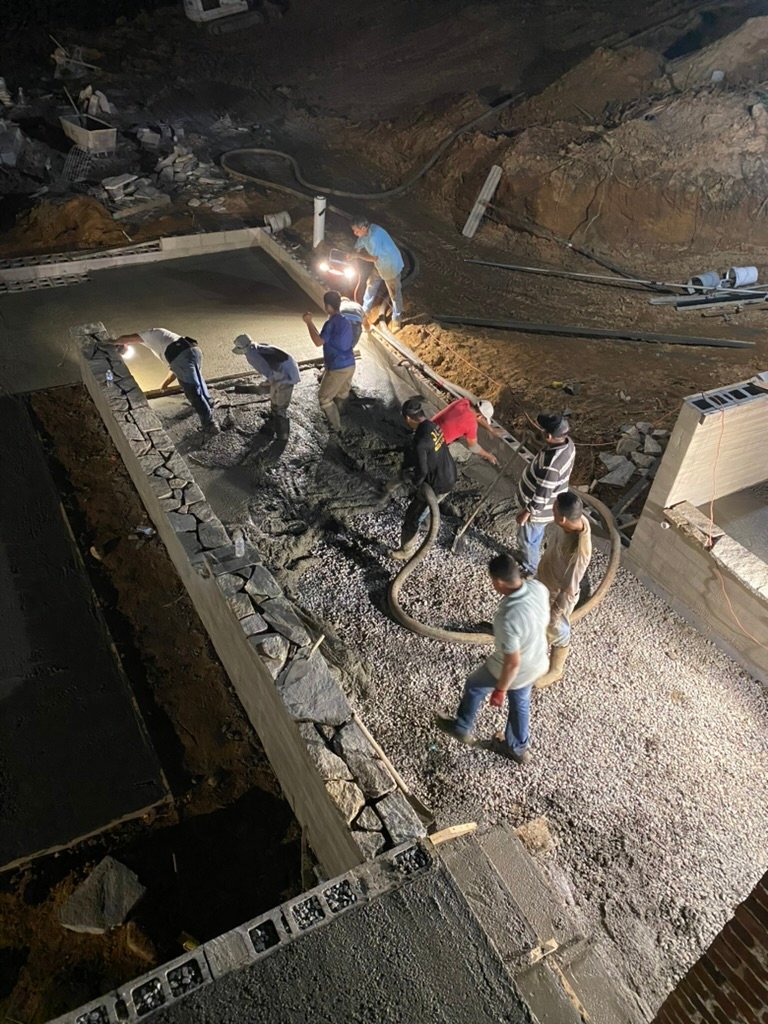
Night pour — crew laying concrete for the Grand Lawn Terrace foundation
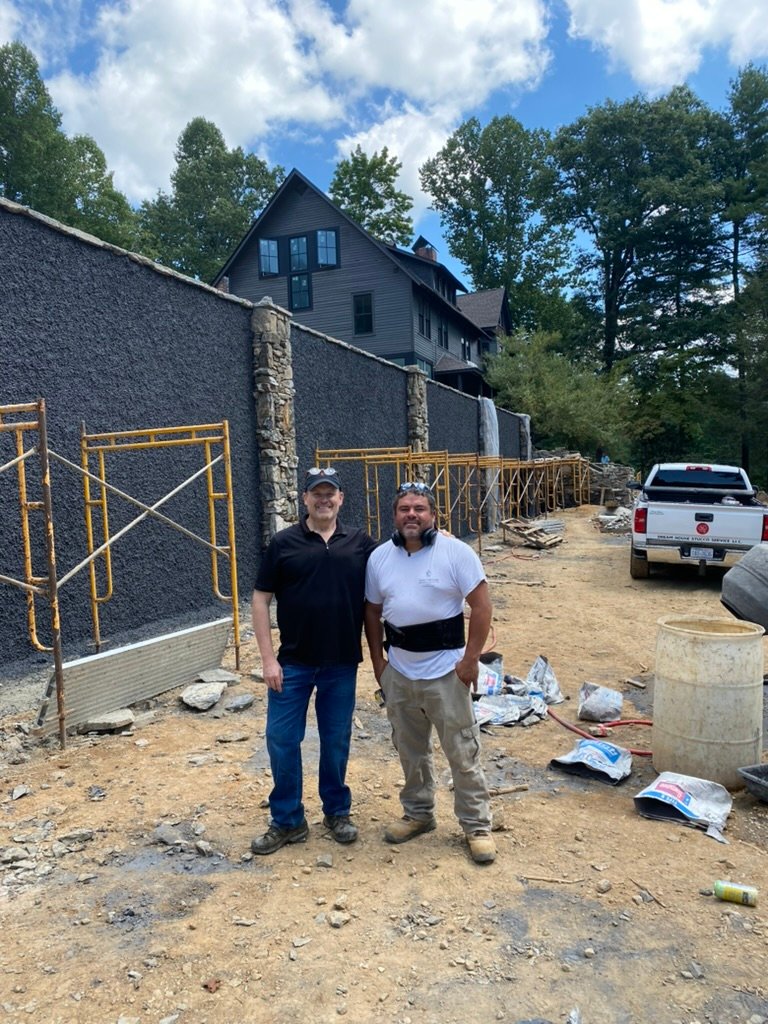
Stucco & stone columns — retaining wall taking its final form
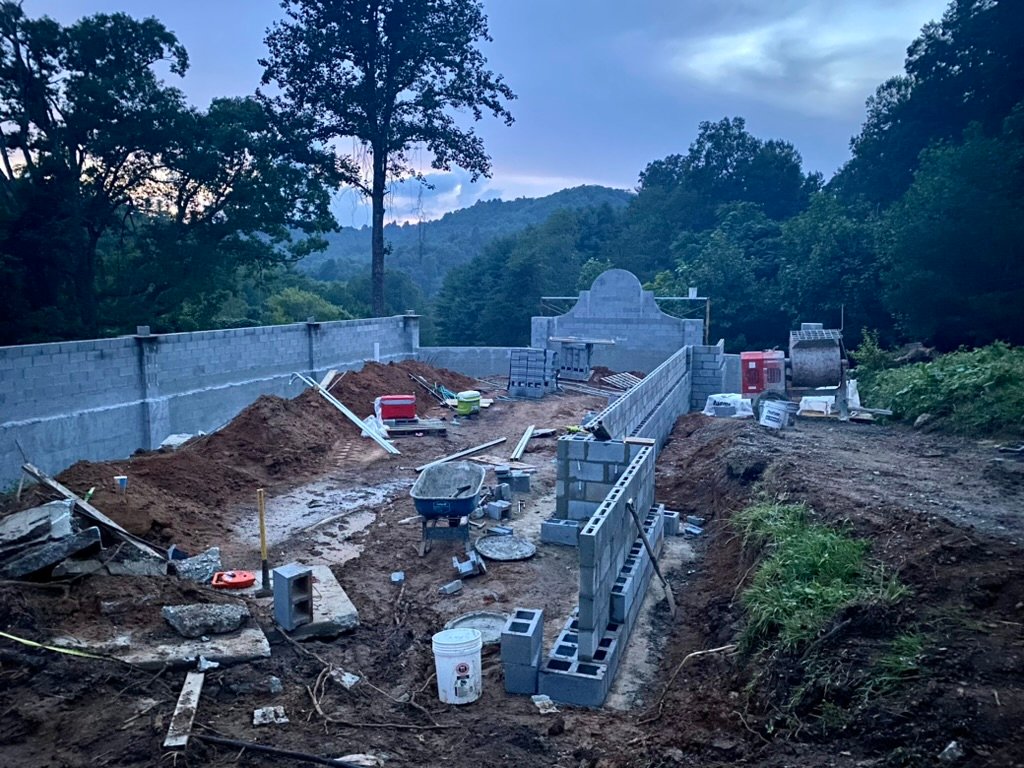
Grand Lawn Terrace at dusk — CMU walls rising with the mountain view beyond
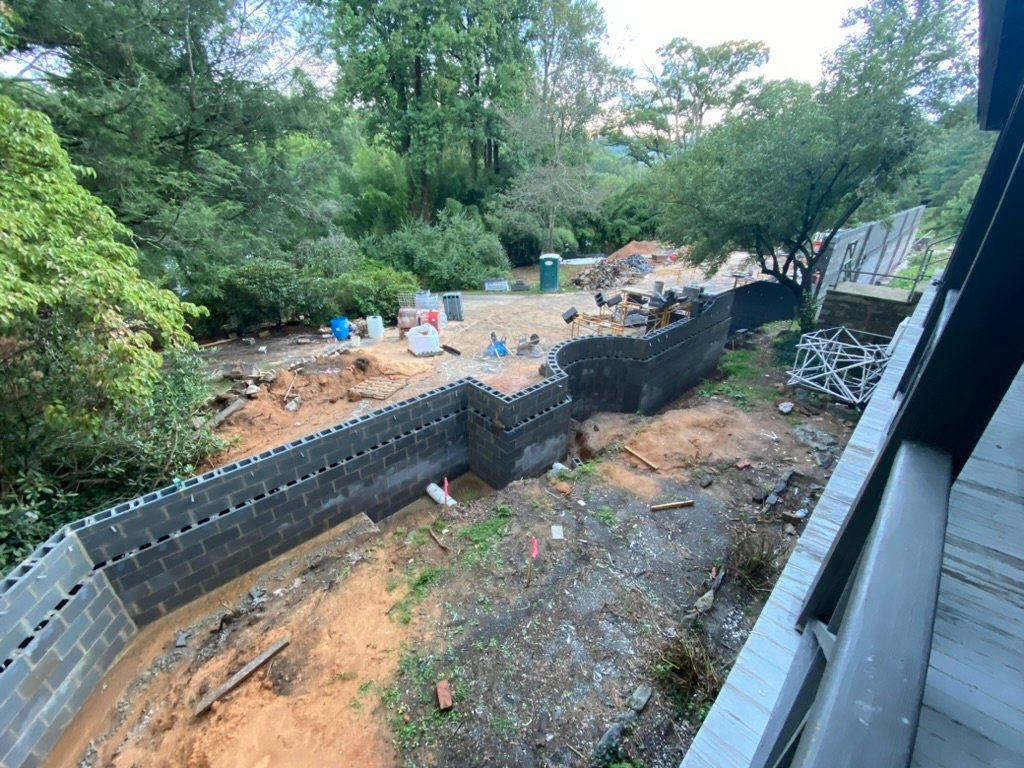
Aerial view — terrace walls taking shape, inn in the background
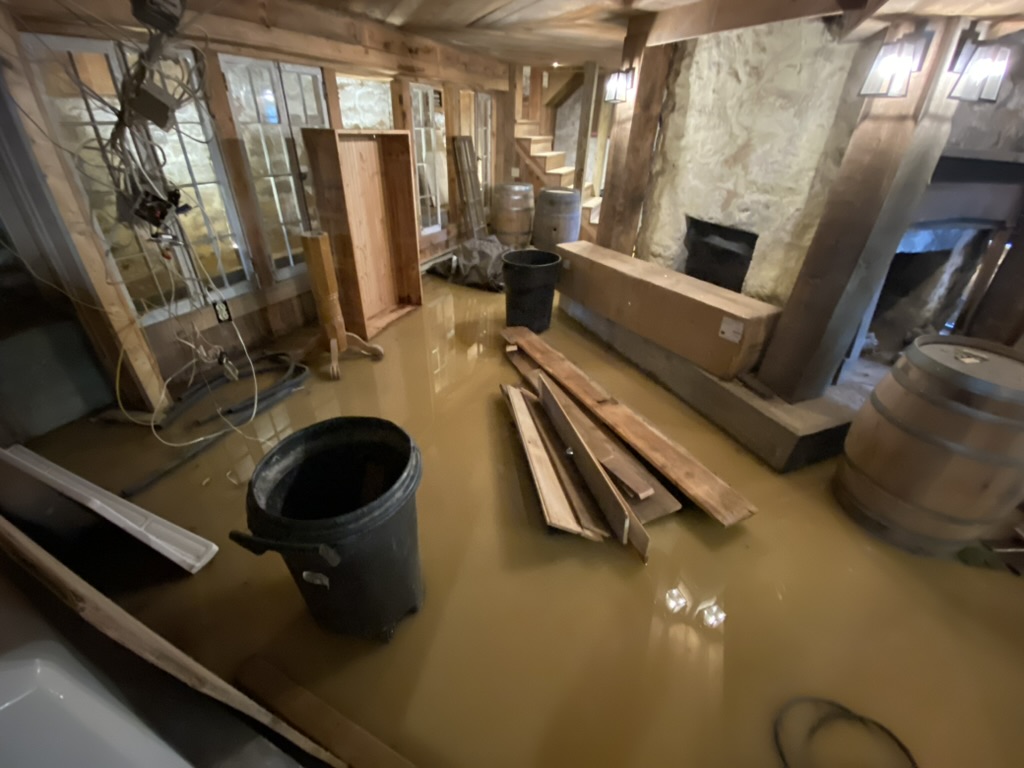
Wine Cellar flood — a torrential storm during construction left 8 inches of water in the cellar
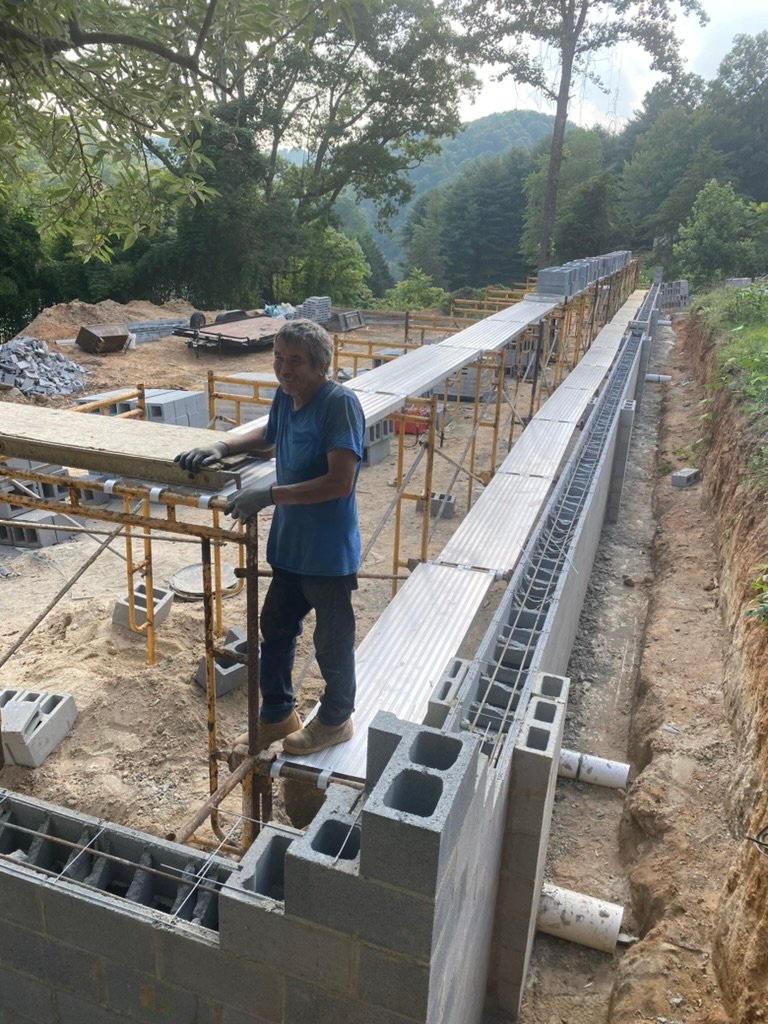
Masonry crew at work — laying CMU block along the terrace perimeter
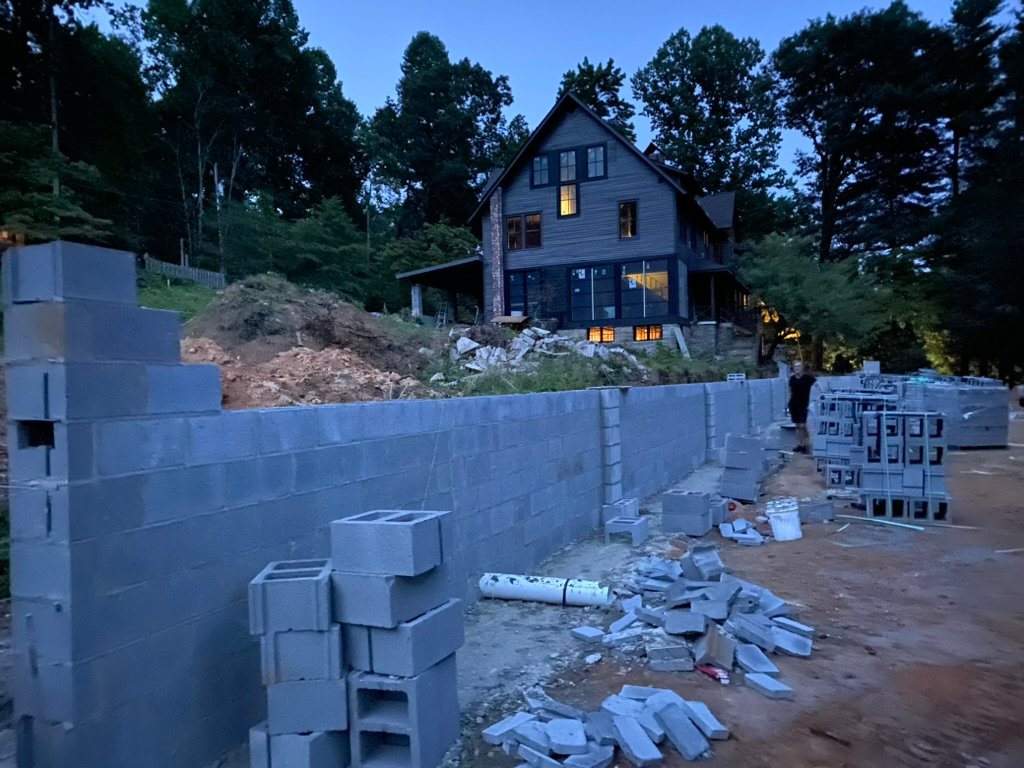
Terrace walls at twilight — inn glowing in the background
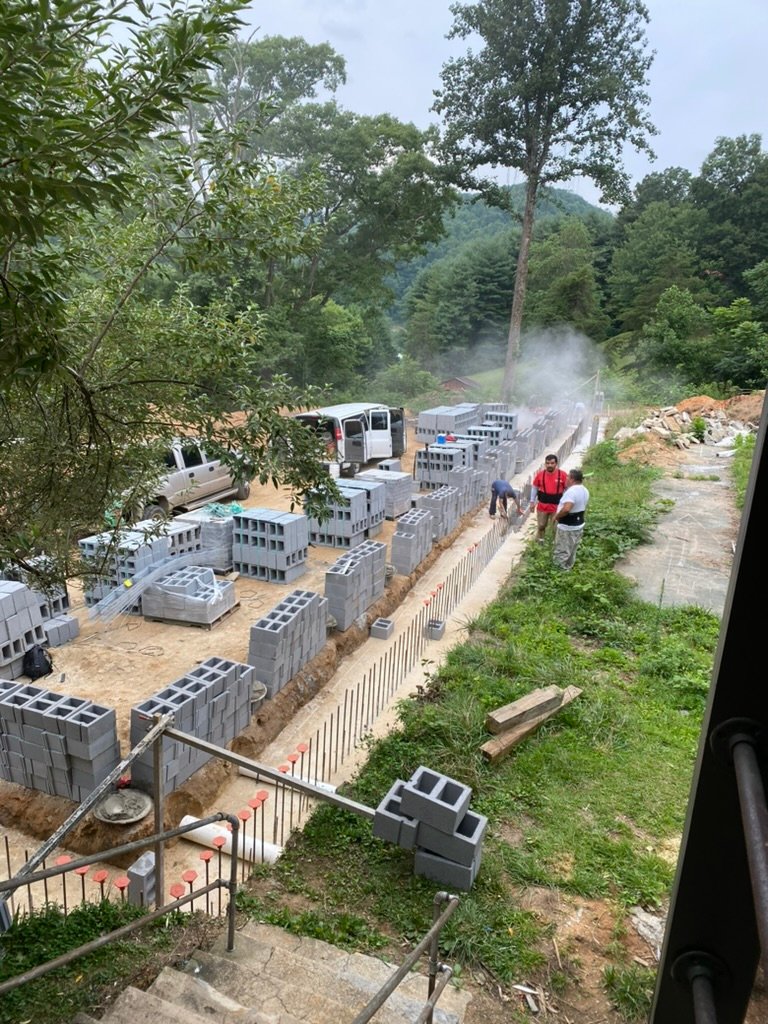
Block delivery day — hundreds of CMU blocks staged for the terrace walls
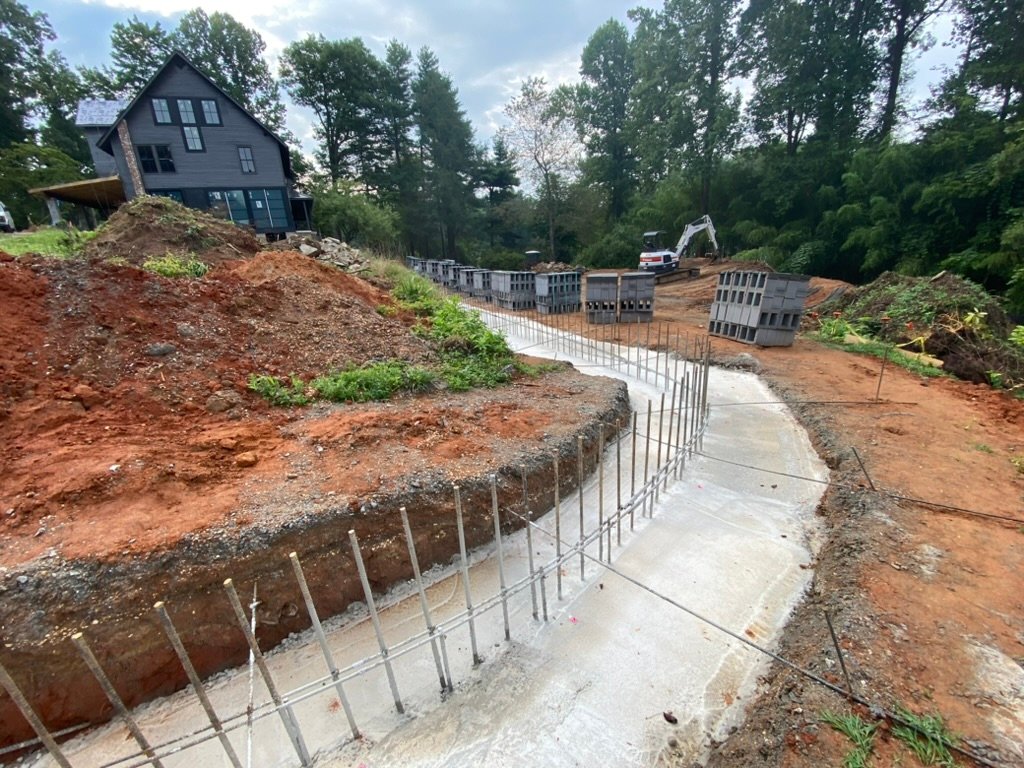
Footing pour — rebar set and concrete footings curing along the terrace line
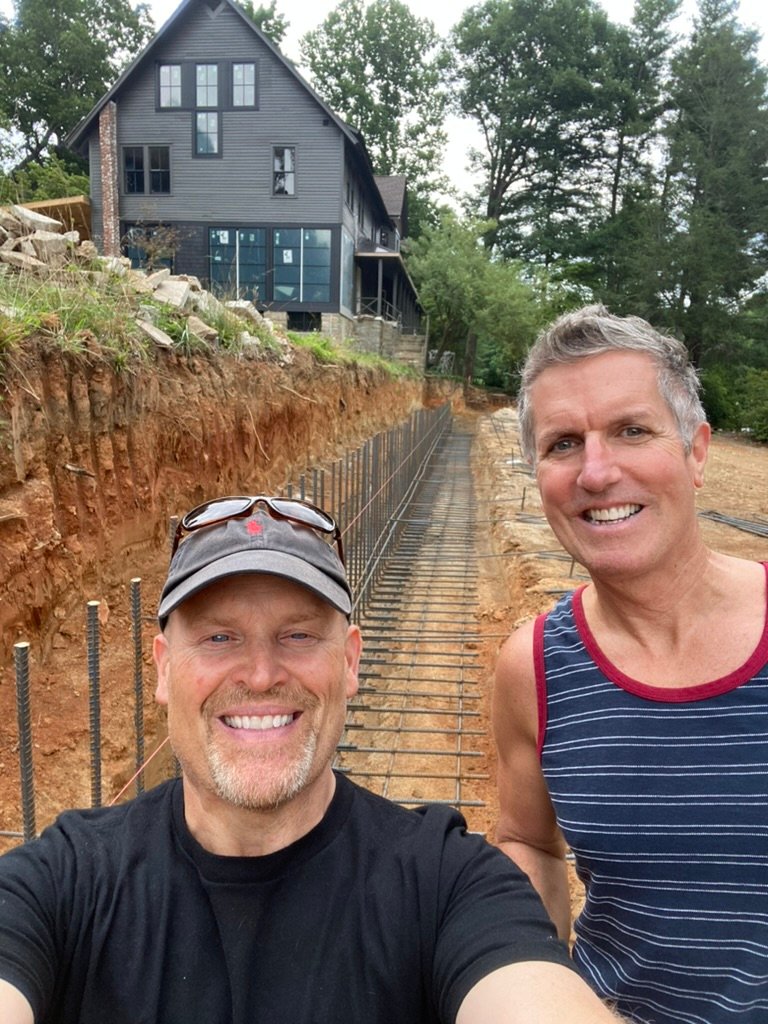
Joel & Jay — selfie on the job site with the inn rising behind them
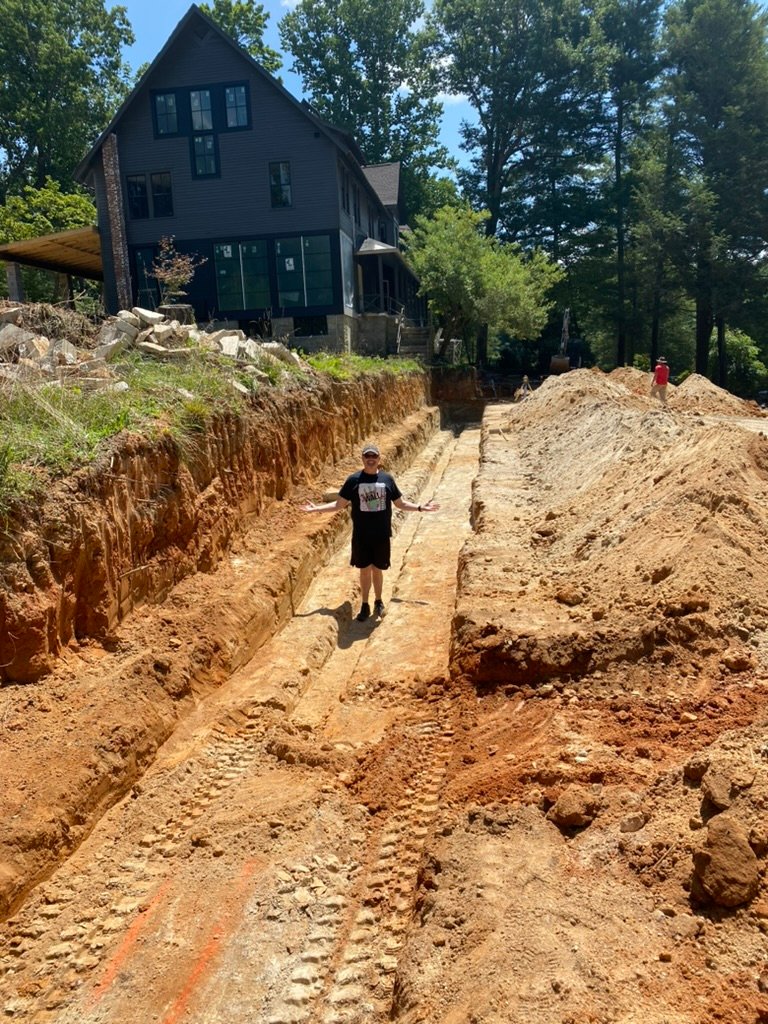
Excavation day — the scale of the Grand Lawn Terrace project comes into view
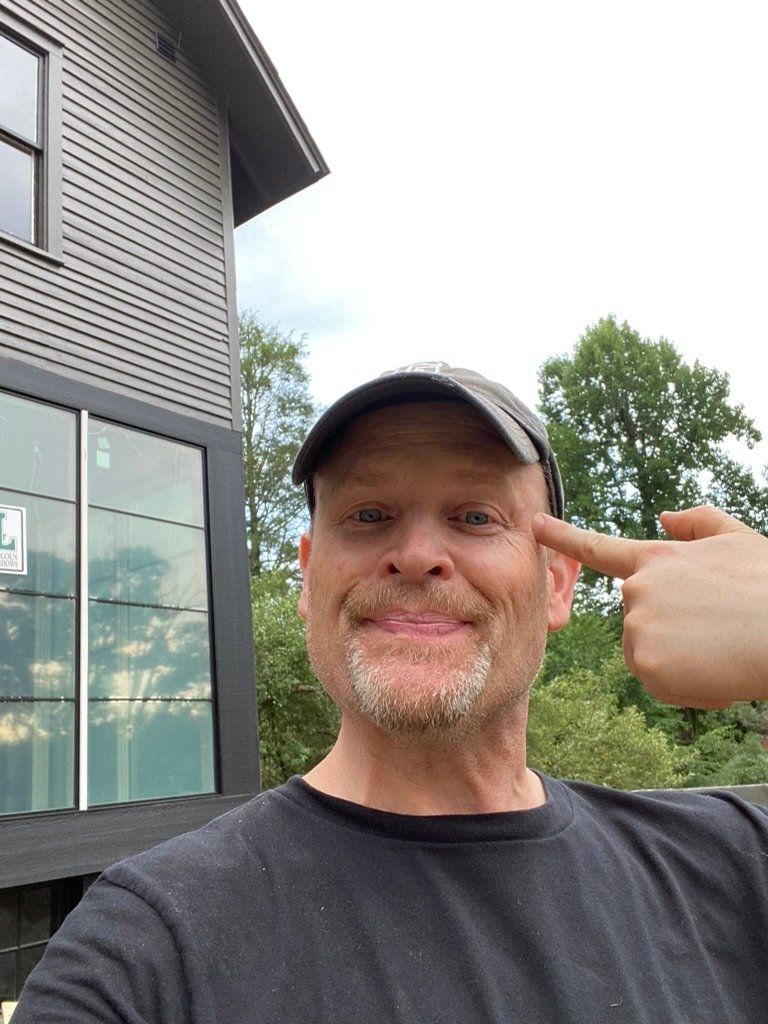
Jay on site — new addition siding & windows taking shape behind him
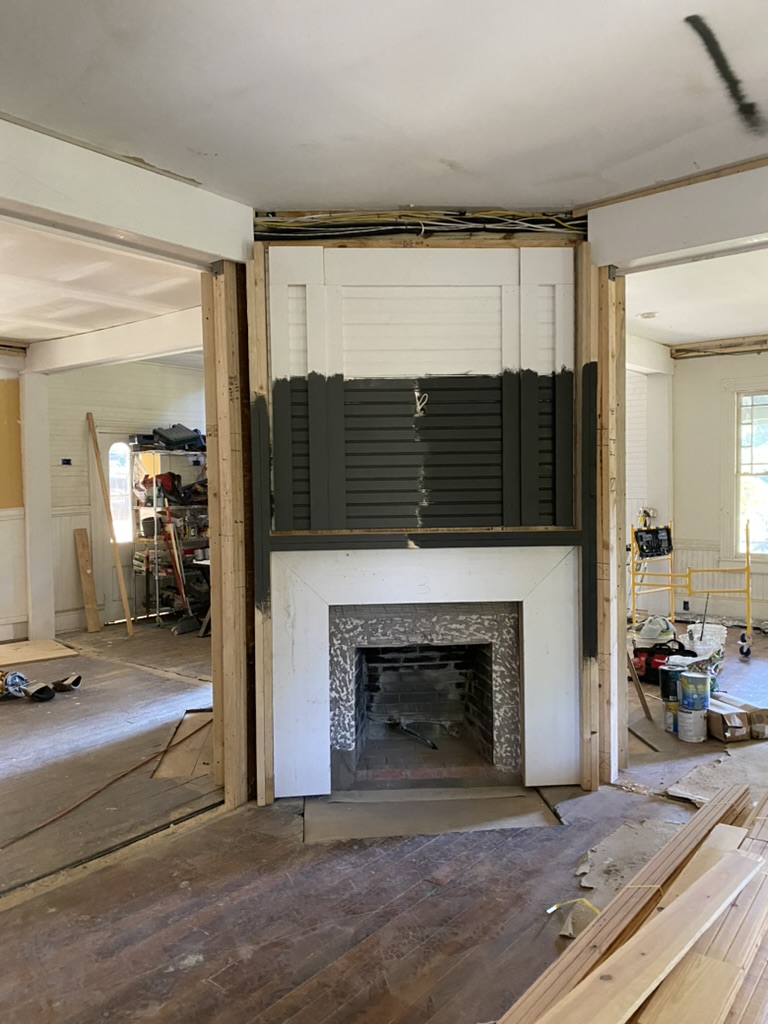
Original fireplace — framing & paint samples during interior renovation
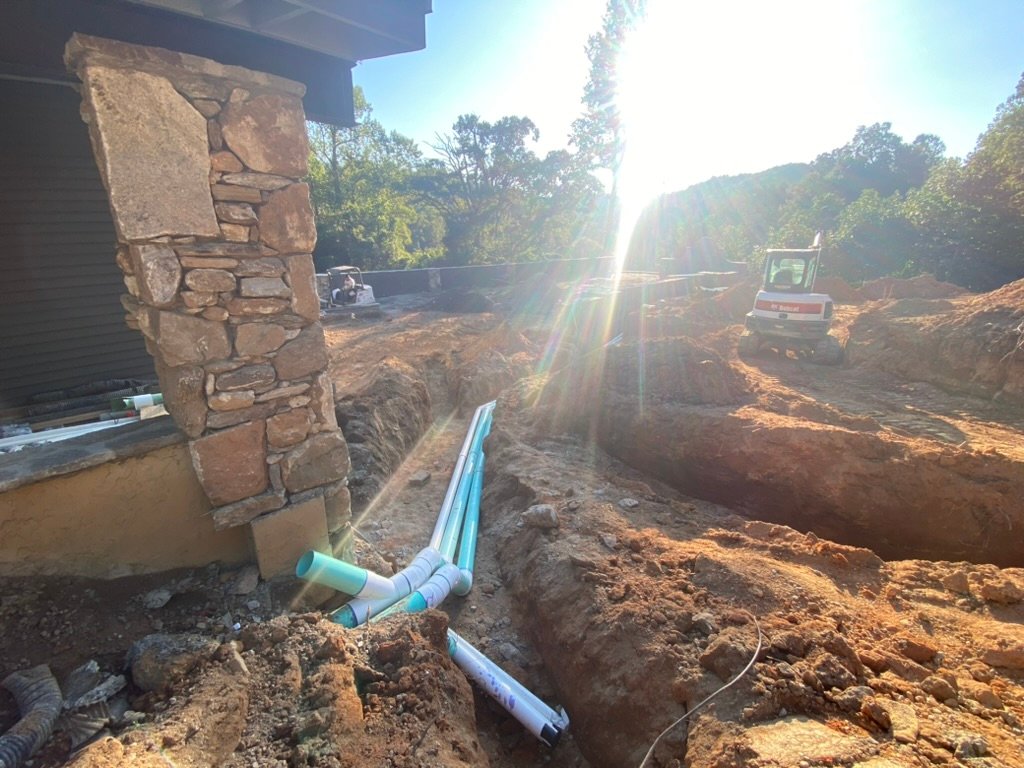
Plumbing rough-in — excavation alongside the stone column with Bobcat on site
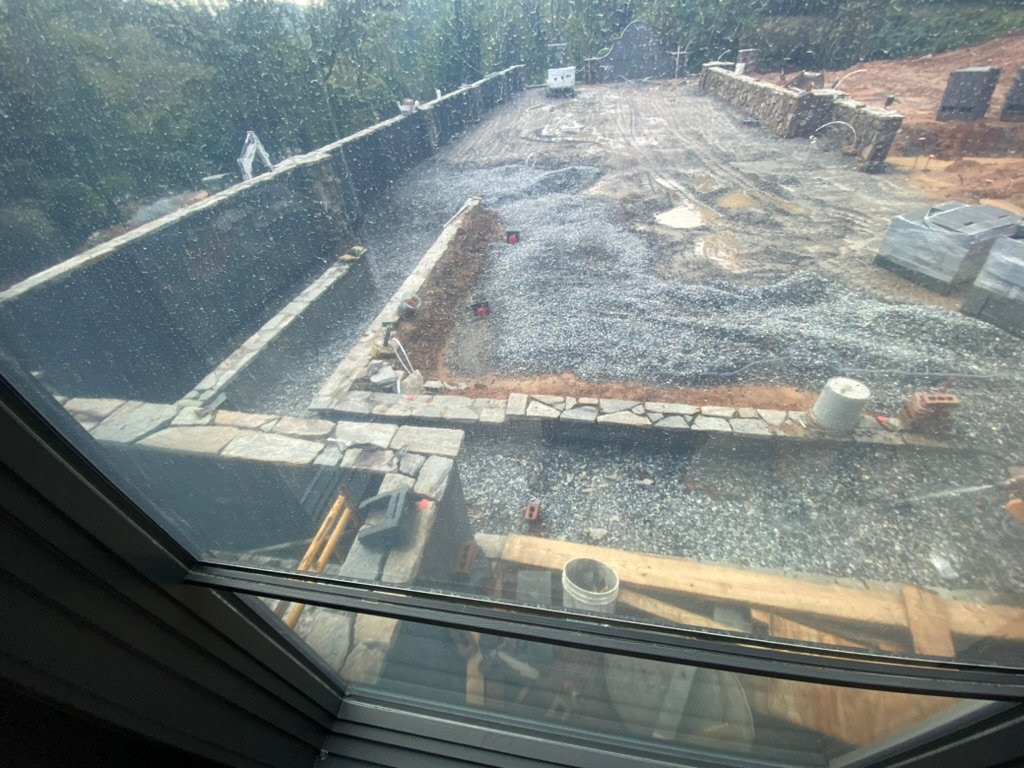
Terrace gravel base — bluestone layout beginning, viewed through rain-streaked window
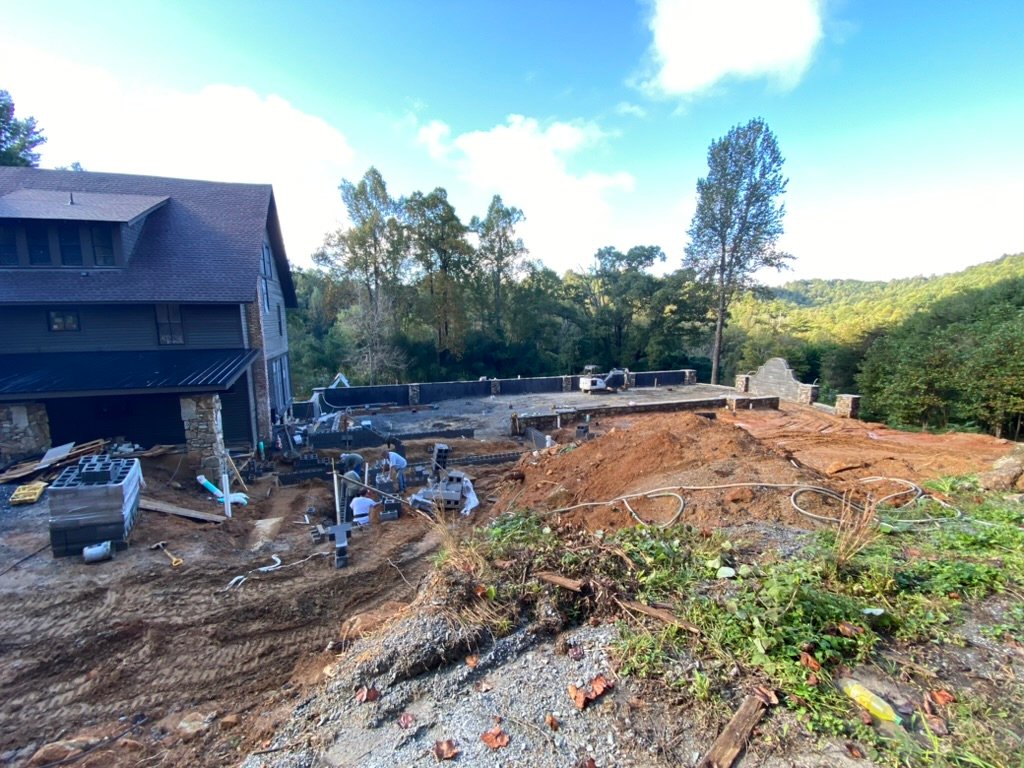
Wide view — inn and terrace walls mid-construction with Blue Ridge treeline beyond
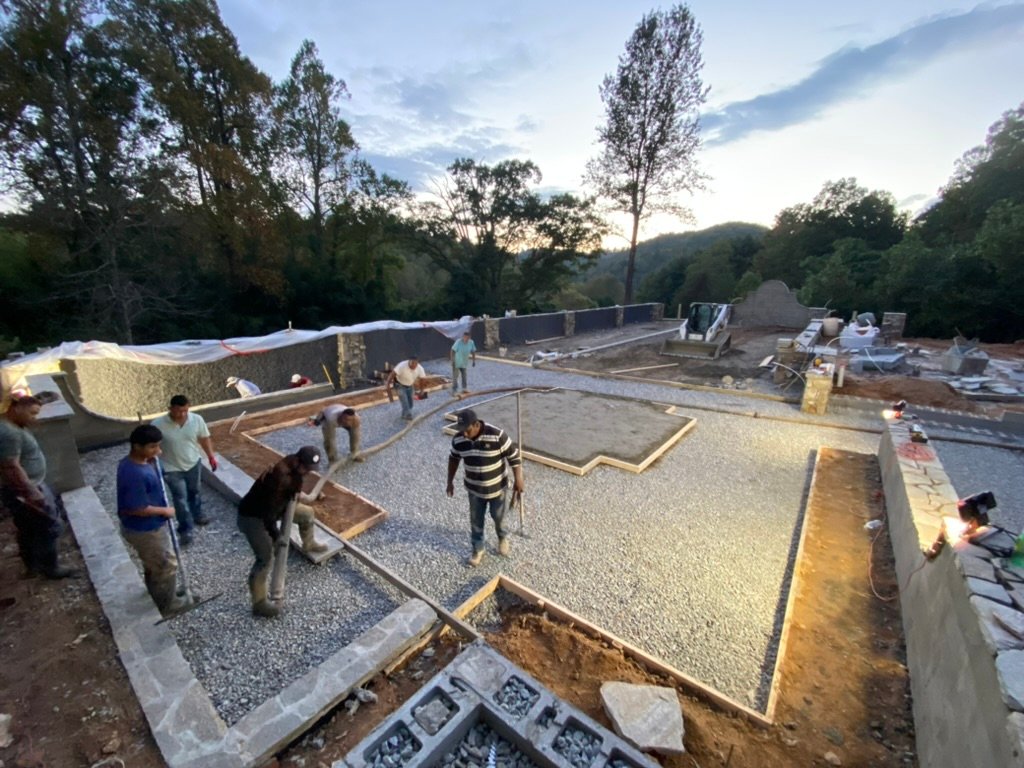
Gravel prep at dusk — crew setting forms for the Grand Lawn Terrace slab
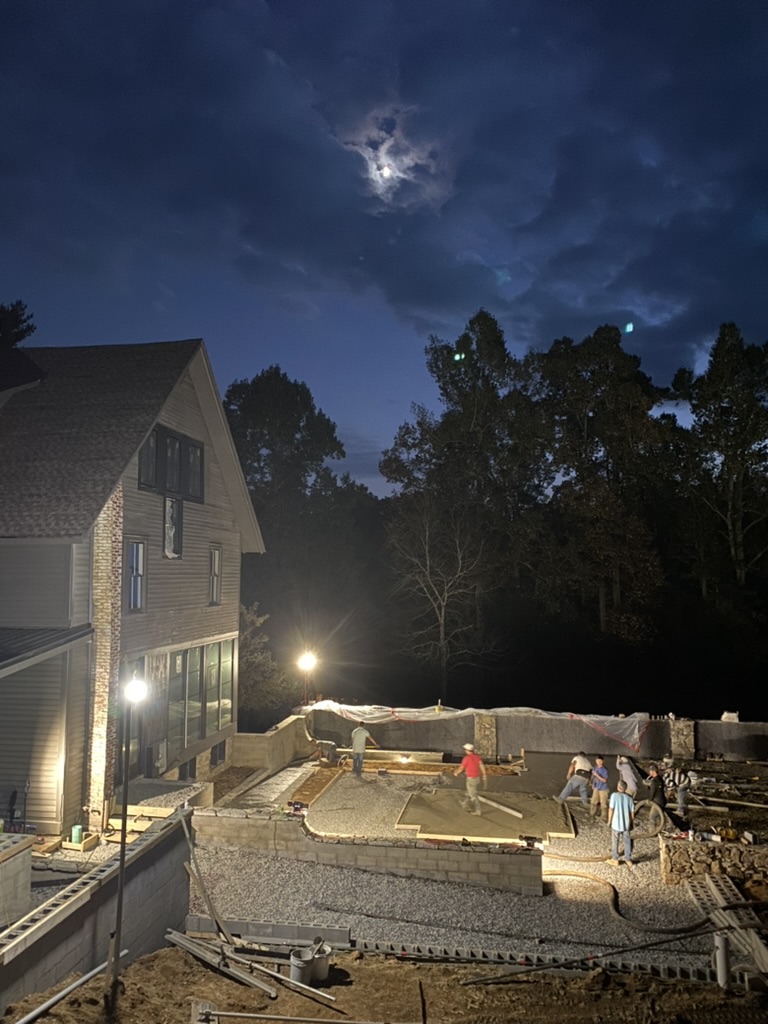
Moonlit pour — crew finishing the terrace slab under a full moon
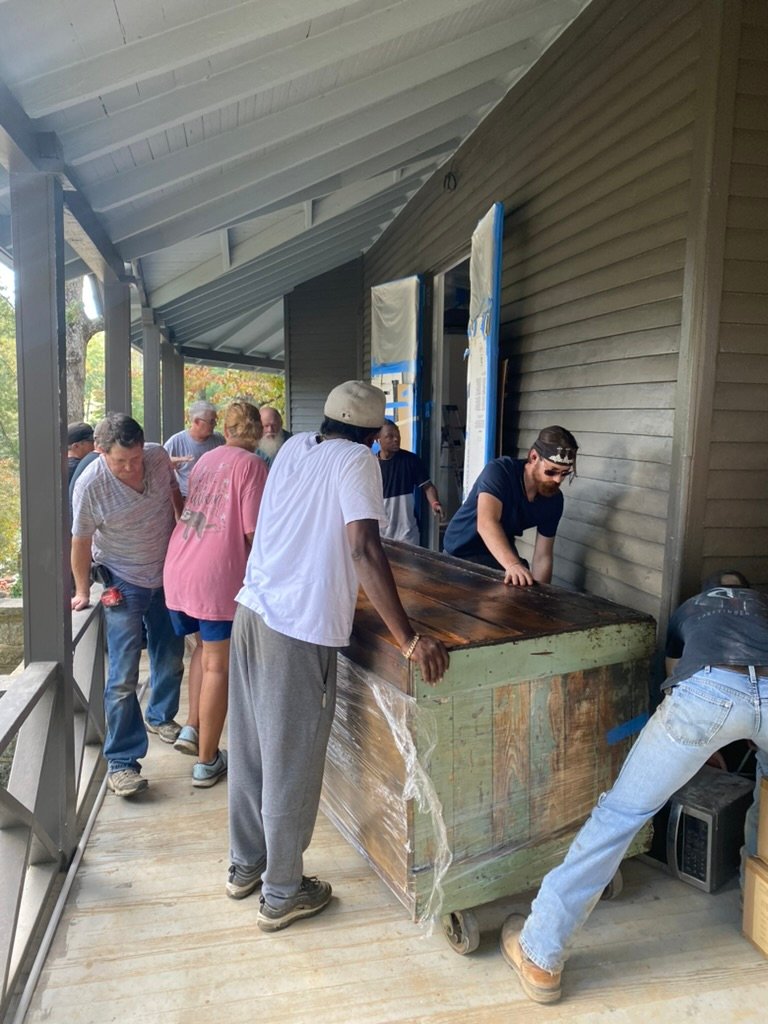
Moving day — the whole crew hauling the antique bar into the Wine Cellar
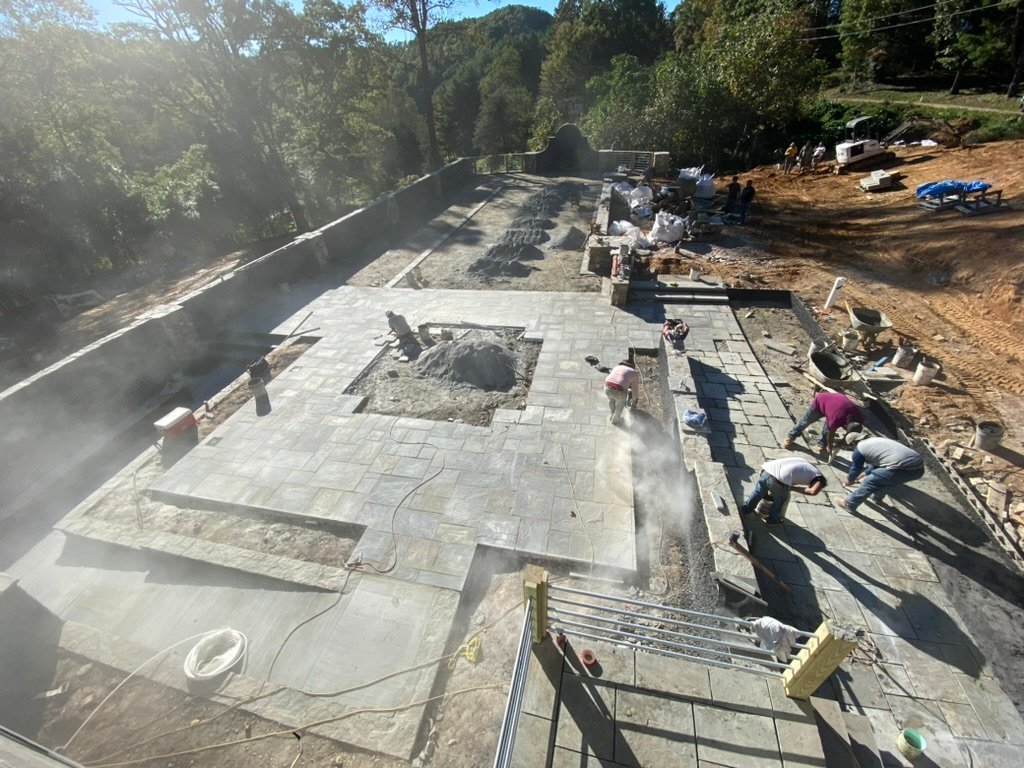
Bluestone installation — crew laying the Grand Lawn Terrace stone surface
Jay (left) & Joel (right) — moving day, 2020
.webp)
2022
Grand Opening: A New Chapter Begins
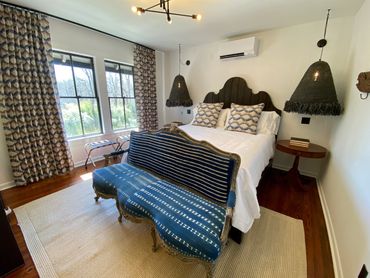
The Saluda Inn officially opened its doors to guests in 2022, debuting 12 uniquely appointed guest rooms and suites — each one a distinct expression of mountain elegance. From the cozy charm of Room 101 to the sweeping loft spaces of the East Presidential Suite 301 A&B and the grandeur of Suite 302, every room tells its own story. The inn quickly earned a reputation as one of Western North Carolina's premier boutique properties, drawing guests from across the country seeking a sophisticated retreat in the mountains.
2024–Present
Resilience After Hurricane Helene
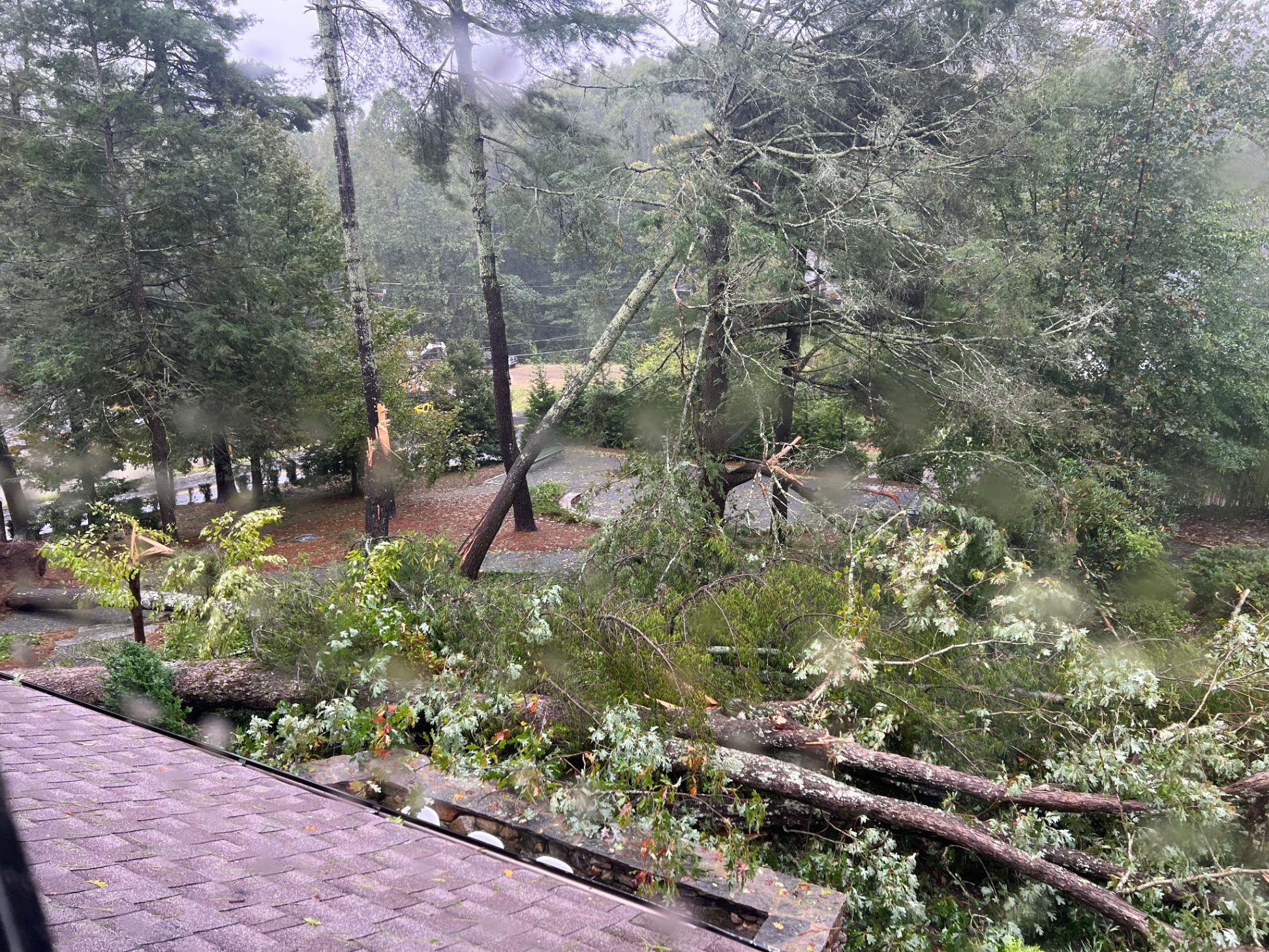
In September 2024, Hurricane Helene brought devastating floods and destruction to Western North Carolina, impacting Saluda and the surrounding communities. Like the town itself, The Saluda Inn demonstrated the resilience that has defined this mountain community for generations. Joel, Jay, and their team worked tirelessly to recover, restore, and reopen — welcoming back guests and standing as a symbol of Saluda's enduring spirit. Southern Living magazine featured The Saluda Inn in a July 2025 article celebrating Saluda's recovery, calling it a place to "book a sumptuous suite" and noting its place on the National Historic Registry alongside its modern amenities.
229 Greenville Street · Est. 1880s
The People Behind the Inn
A doctor who built the home, a woman who transformed it into an inn, the husband she honored with its name — and a century later, two entrepreneurs who restored it to its former glory.
c. 1880s · Original Builder
Dr. E.B. Goelette
Physician & Pharmacist · Saluda's First Doctor
Saluda's very first doctor and druggist, Dr. E.B. Goelette constructed the original building at 229 Greenville Street in the 1880s as a private Queen Anne-style residence. As the town's founding physician, he was among its most consequential early citizens — tending to the health of his neighbors while investing in the town's physical fabric.
The home he built reflected the Victorian craftsmanship and mountain character that still defines historic Saluda today, and it would go on to become the foundation of more than a century of hospitality on Greenville Street.
1914 · Founder of the Inn
Mrs. Louisa A. Leland
Entrepreneur & Innkeeper · Saluda, North Carolina
The true founder of the inn was Mrs. Louisa A. Leland. In 1914, she acquired the Goelette property and hired local builder Luther Thompson to substantially enlarge and remodel the home into a Colonial Revival-style establishment — transforming a private residence into a proper inn.
When she opened the doors to guests in 1914, she named the establishment The Charlton Leland in honor of her husband. Saluda at that time was at the peak of its fame as a mountain resort — eight passenger trains arrived daily, and the town supported 37 boarding houses and inns to welcome the flood of visitors. It went on to become the last of the "great inns" built during Saluda's boom as a mountain tourist destination — a legacy entirely of her making.
1914 · The Namesake
Charlton Leland
Husband of Mrs. Louisa A. Leland
While Charlton Leland was a real person, he was not the entrepreneur who established the property — that distinction belongs entirely to his wife, Mrs. Louisa A. Leland. Charlton was the husband she chose to honor when she named her new inn.
The property bears his name on the National Register of Historic Places — listed in 2006 as the Charlton Leland House, also known as the Dr. E.B. Goelette House and the Saluda Inn. A name given in love, preserved by history.

2020 · Co-Owner & Visionary
Joel Kirby
Registered Landscape Architect · Greenville, SC
A registered landscape architect based in Greenville, South Carolina, Joel Kirby built a distinguished career designing high-end residential landscape plans. Over time, large-scale event planning became his true passion — and that rare combination of spatial vision and hospitality instinct gave him an exceptional eye for how space, setting, and experience work together. It was a sensibility that would prove essential in reimagining The Saluda Inn. Joel's deep love of interior design guided every step of the inn's interior selections, and he spent countless hours personally choosing each piece — furniture, fabrics, art, and accents — that gives The Saluda Inn its distinctive warmth and character.
When Joel and his partner Jay Burriss acquired the property in 2020, Joel brought his design expertise to bear on every detail of the renovation — from the grounds and gardens to the architectural character of the building itself. His vision was to honor the inn's historic bones while creating an experience worthy of the mountain setting.
2020 · Co-Owner & Artist
Jay Burriss
Oil Painter · Real Estate Professional · Chester & Greenville, SC
Originally from Chester, South Carolina, Jay Burriss made his home in Greenville where he built a career in residential real estate with Coldwell Banker Caine — developing a deep appreciation for the character of historic homes and the stories they hold. Jay's love of flipping residential properties sharpened his eye for what a space could become, and that hands-on experience with design decisions and renovations would directly guide the transformation of The Saluda Inn. That instinct for what makes a place feel like home proved invaluable when he and Joel set their sights on 229 Greenville Street. Jay's love of the yard and his cleverness in maintaining a landscape has helped make the grounds at The Saluda Inn curated, cultivated, and truly special.
Jay is also an accomplished oil painter whose original works are displayed throughout the inn — landscapes, interiors, and mountain scenes rendered in rich, luminous color. His art gives the inn a warmth and personal character that no decorator could manufacture. When guests admire the paintings on the walls, they are seeing the inn through Jay's eyes.
"From a physician's Victorian home to a mountain inn — and now, a century later, to a boutique luxury retreat. The building at 229 Greenville Street has always been a place where people come to be cared for."
As Seen In
"The Saluda Inn is an adults-only property designed to help guests completely relax. Even though the building was built in the 1880s and is listed on the National Historic Registry, it still features plenty of modern amenities."
— Lydia Mansel, Southern Living
July 5, 2025
Read the Full ArticleFrom Our Guests
"Jay and Joel — there are so many ways I am grateful for the two of you. As I entered the Inn on Friday evening, I thought about the sacrifice and dedication you have given to all of us who cherish the Saluda lifestyle. Should you two not have done this... this amazing enterprise has given us a quality of life that nothing else here offers. Your personalities blended with the fabulous Inn and its occasions are a blend of magic. Just wanted you to know how grateful I am."
— June Bradham
Turf & Tunes at The Saluda Inn · July 11, 2026
RE-juvenate. RE-inn-vent. RE-store.
Whether this is your first visit or you have been a guest many times, Joel, Jay, and the entire Saluda Inn team want your experience to be exceptional. Stay in a place of comfort — our staff is always available to help with any questions or concerns you may have. Relax. We have you covered.
Co-Owner & Proprietor
Joel Kirby
Joel's vision for The Saluda Inn was rooted in a deep appreciation for historic architecture and the belief that a truly great inn should feel like a home — one with stories in every wall and warmth in every room.
Co-Owner & Proprietor
Jay Burriss
Jay brought a passion for design, hospitality, and community investment to the project. His eye for detail is evident in every carefully curated space throughout the inn, from the guest suites to The Wine Cellar.
Primary Source Documents
From the Archives
Original advertisements, menus, brochures, and ephemera spanning over a century of the inn's history — from The Charlton Leland of the 1930s to the Saluda Inn of today.
The Iron Road That Built a Town
The Saluda Grade & the Railroad
No single force shaped Saluda more profoundly than the railroad. The story of how iron rails climbed the steepest standard-gauge grade in the eastern United States — and the mountain town that grew up around them — is one of the most remarkable chapters in Western North Carolina history.
Origins · 1835
A Dream of Connecting Charleston to the Ohio River
In the 1830s, the people of Charleston dreamed of a rail connection from the Ohio River to their harbor. With the encouragement of legislators like Joel Poinsett, the Louisville, Cincinnati, and Charleston Railroad Company was chartered in South Carolina in 1835. Short sections of track were laid by small companies over the following decades — milestones included reaching Columbia in the 1840s and Spartanburg in the early 1870s.
By 1874, the Spartanburg and Asheville Railroad was pushing across the Blue Ridge Mountains toward Asheville. The challenge ahead was unlike anything American railroad engineers had yet attempted in the East.

Steam locomotive on a steep mountain grade — the engineering challenge that defined Saluda
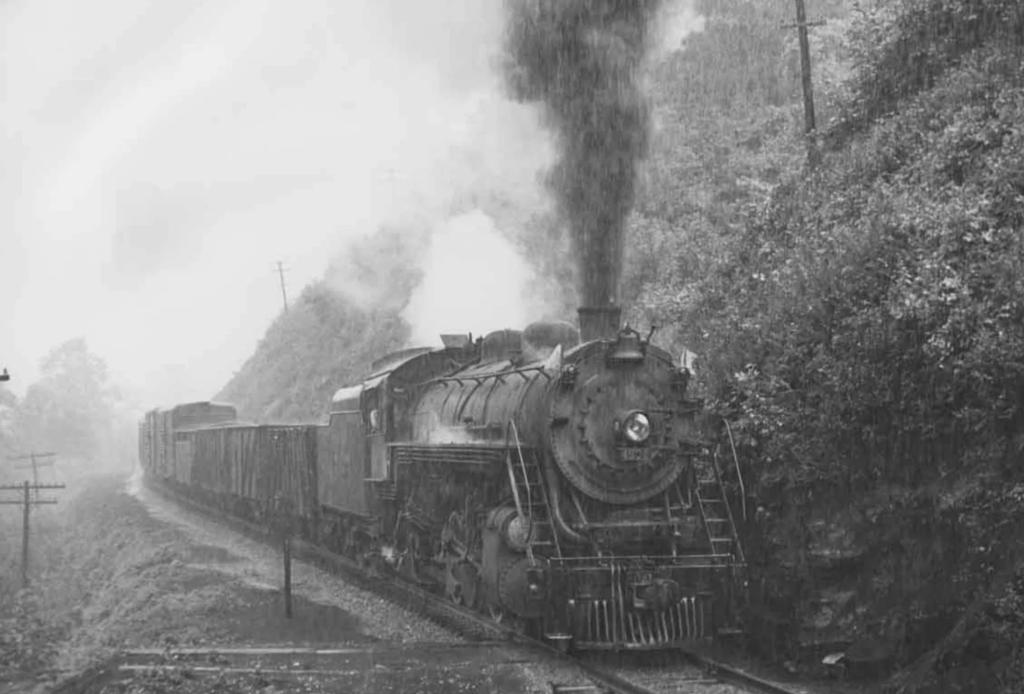
A steam locomotive laboring up the Saluda Grade — courtesy Saluda Depot Museum
Engineering · 1874–1878
Col. Coleman, Capt. Pearson & the Steepest Grade in the East
Col. Thaddeus Coleman and Capt. Charles W. Pearson, former Confederate Army officers, undertook to build the railroad from Spartanburg to Asheville. Rejecting the old trading path and wagon road due to unstable ground, Pearson and Coleman routed the roadbed up the steep gorge along the Pacolet River — straight up the Blue Ridge Escarpment with no foothills to meander through.
The result was the steepest mainline standard-gauge railroad in the United States: a three-mile slope averaging 4.7% grade with a maximum exceeding 5.1%. After three months of convict labor, the tracks finally reached the top.
The huge iron monster came puffing noisily into view on Independence Day, 1878. Pace's Gap was changed forever — people cheered, children hid behind their mothers' skirts, and horses reared in terror. The train engineers referred to the trek as "going up Saluda Mountain," and though no peak by that name existed, Pace's Gap chartered with North Carolina as "Saluda" in February 1881. The railroad put Saluda on the map.
Town Life · 1880s–1940s
The Railroad Was the Center of Everything
The railroad was the center of activity in Saluda. People soon learned to run their lives around the schedule of trains. Stores, barber shops, a bank, and a theater were built along the main street which paralleled the track. Passengers debarked to find most of the populace gathered to see who had arrived that day.
When the track opened to Hendersonville, many passengers would jump off long enough to buy "soda water" or candy at the general store. Freight trains stopped to check brakes before descending the challenging grade, or after puffing up the grade to let the "helper" engine disconnect.
The luxury "Carolina Special" brought passengers from the lowlands for many years. The "Summer People" remembered the trip from Charleston or Savannah with steamer trunks, wicker hampers, and suitcases — cinders blowing through open windows, mothers and nursemaids struggling to keep the children clean for arrival at the top of the Saluda Grade. At the height of the resort era, eight passenger trains arrived in Saluda each day, and the town supported no fewer than 37 boarding houses and inns.

Saluda Depot and town life, early 1900s

The helper engine — a necessity on the Saluda Grade
Engineering Marvel
The Helper Engine at Melrose Station
The "Helper" was a necessity going up the grade. Built for traction rather than speed, the helper engines were stationed at the bottom of the grade at Melrose Station — 1,000 feet lower in elevation than Saluda. When a freight train came from Tryon, the helper was connected to the rear of the train.
With the regular engine pulling and the helper pushing, the freight came puffing up the grade. It was a daily spectacle that defined life in Saluda for generations — the sound of laboring engines echoing through the mountain air, the smell of coal smoke drifting over the town.
The Saluda Grade remained in active use for over a century, a testament to the audacity of its builders and the tenacious spirit of the mountain community it served. Today, the legacy of the railroad lives on at the Saluda Depot Museum, which preserves this remarkable chapter of American railroad history.
Explore the History
Saluda Railroad Depot Museum
The Saluda Depot Museum preserves the history of the Saluda Grade and the railroad that built this mountain town. Located in the heart of Saluda, the museum is a must-visit for anyone who wants to understand the remarkable story behind this community.
Visit the Saluda Depot MuseumThrough the Lens of Time
Historic Saluda, NC
A glimpse into the town that shaped The Saluda Inn — from the famous Saluda Grade railroad to the streets that have welcomed travelers for over a century.
Photos sourced from Wikimedia Commons under Creative Commons and Public Domain licenses.
Be Part of the Story
Come Experience It for Yourself
229 Greenville Street, Saluda, NC 28773 · 828-388-9027